




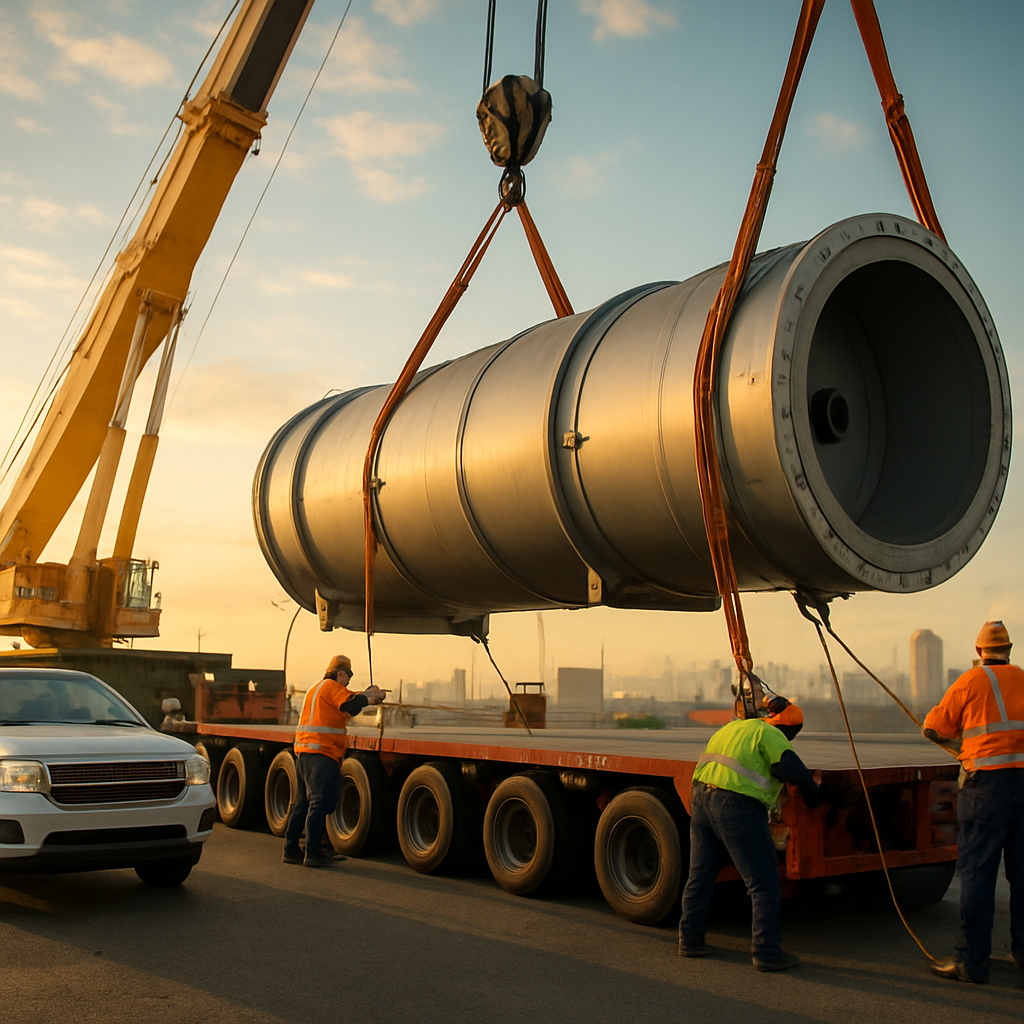
RO-RO Transport: Efficient Solutions for Heavy Cargo
RO-RO transport is rapidly gaining ground in Australia as project owners look for faster ways to move mining equipment, trucks, and construction machinery between key ports. Yet behind the apparent simplicity of “drive on, drive off” lies a growing problem: many shippers underestimate the engineering and planning required for heavy and oversized cargo, exposing projects to avoidable risk and cost.
- Underestimating vessel deck and ramp limits for heavy cargo
- Ignoring port infrastructure constraints at Australian terminals
- Fragmented planning between sea legs and inland road transport
- Last-minute cargo reconfiguration and routing changes
- Insufficient attention to permits, lashing, and risk assessments
RO-RO transport: why “simple” can quickly become high-risk
RO-RO transport is widely perceived as a straightforward option for rolling machinery on and off vessels via built-in ramps, especially on East and West Coast routes. However, once weights climb and dimensions push Australian road limits, even small planning gaps can trigger vessel refusals or load rejections at short notice. Case studies from Brisbane and Fremantle show that when heavy cargo is booked without detailed checks, the schedule advantages of RO-RO can evaporate overnight.
Hidden constraints: decks, ramps, ports and permits
One of the most common pitfalls is treating vessel decks and ramps as if they are uniformly rated, when in reality axle loads, centre-of-gravity and ramp angles are critical. Shippers can also overlook port-specific limits such as yard space, trailer availability and height restrictions on terminal exits. These factors complicate supply chain management and may require specialised trailers or route surveys to clear out-of-gauge cargo safely.
Early warning signs your RO-RO move is in trouble
Repeatedly changing routes between Australian ports, or reconfiguring cargo at the last minute to “make it fit”, are strong indicators that complex project freight planning has not been done properly. Lack of clarity about state-based road permits, escorts and bridge limits often surfaces only days before sailing. When there is limited visibility of how cargo will transfer from ship ramp to final site, even well-priced transportation solutions can spiral into extended laydowns, storage fees and missed construction milestones.
The cost of ignoring engineering and coordination
Assuming that RO-RO will automatically be safer than breakbulk can be an expensive misconception. Without engineered lashing plans, accurate data on dimensions, weights and centre of gravity, and alignment between sea and road legs, heavy cargo transportation strategies are exposed to damage, demurrage and rebooking. Guidance from bodies such as the International Maritime Organization, via resources like the Code of Safe Practice for Cargo Stowage and Securing at https://www.imo.org, stresses rigorous planning to prevent incidents.
For Australian project owners, the real opportunity lies in treating RO-RO as part of broader Project Logistics rather than a stand-alone port activity. When industrial freight forwarding experts combine integrated project logistics management with end-to-end logistics solutions, RO-RO can compress build schedules and reduce handling risks compared with traditional outsized cargo shipping services. Before committing to your next heavy RO-RO shipment, review whether your team has access to specialized heavy lift transport capabilities, freight forwarding services and global project cargo coordination expertise—or whether it is time to speak with an expert and stress-test your current approach.

Related posts

Reverse Logistics: Enhancing Sustainability through Efficient Product Returns
In today’s consumer-driven economy, product returns have become a common o
Understanding Project Logistics: A Comprehensive 2026 Guide
Discover why Project Logistics will make or break Australian projects in 2026, a
FBI Investigates Criminal Case in Baltimore Bridge Disaster
The investigation of the Baltimore bridge disaster may be turning into a crimina
