




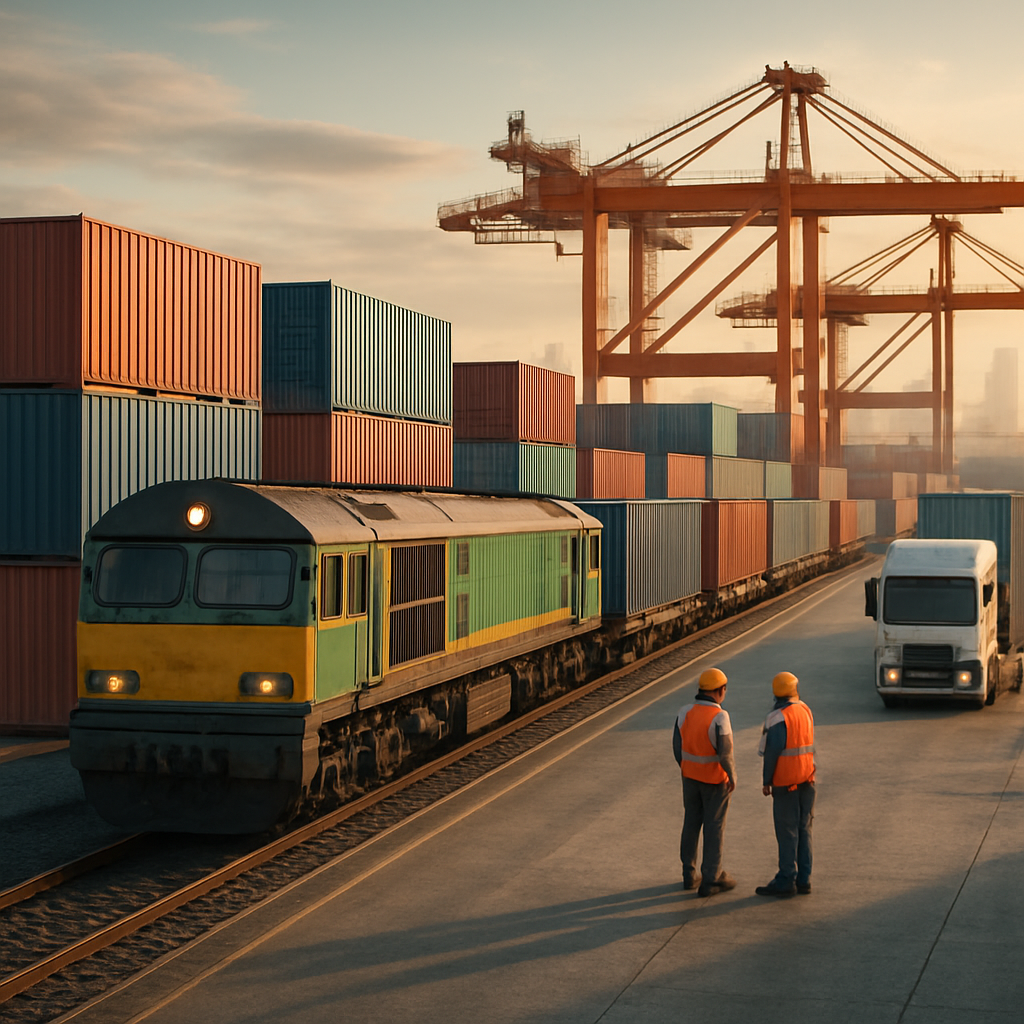
Rail Freight Forwarding Explained: A Comprehensive Overview
Rail freight forwarding in Australia is evolving rapidly, and the real competitive advantage lies in how providers design, manage, and optimise your rail-based freight solutions. For Australian importers, exporters, and domestic shippers, the right forwarding partner can transform rail from a complex network of operators and terminals into a single, accountable service that supports broader logistics and supply chain performance.
Rail Freight Forwarding Explained
At its core, rail freight forwarding is the professional coordination of end-to-end rail shipping, including planning routings, securing capacity, managing documentation, and overseeing terminal handovers. High-performing forwarders integrate these steps into tailored freight transportation solutions that match your customer lead times, port windows, and warehouse operations. Instead of dealing separately with carriers and terminals, you gain one point of control across domestic rail freight options, linehaul, and last-mile delivery.
In Rail Freight in Australia, distance, volume, and network constraints create real performance gaps between providers. Some simply book space on existing services, while others engineer intermodal logistics strategies that blend rail, road, and port links for reliability and cost control. The latter approach delivers clearer visibility, fewer handoff risks, and better use of port-to-warehouse rail transport, particularly on long-haul export corridors.
- End-to-end planning of rail legs, terminals, and connecting road legs
- Contracted access to multiple rail operators and equipment pools
- Integrated freight logistics with single-point accountability
- Technology-enabled tracking and exception management
- Specialised knowledge of Australian freight corridors and port interfaces
What Sets Leading Rail Forwarders Apart
Leading rail freight forwarding providers distinguish themselves through transparency, systems integration, and operational discipline. They provide live tracking, clear escalation paths, and predictable pricing, so you can model scenarios and allocate capacity with confidence. Their platforms connect rail movements with warehouse management and transport systems, supporting precise rail and road freight coordination for time-sensitive freight.
Making a Better-Informed Provider Choice
When evaluating your options, look beyond base rates to how each provider manages risk, variability, and information. Ask how they protect against congestion, how quickly they communicate disruptions, and how their intermodal shipping services support your growth plans. Reviewing safety records, corridor expertise, and case studies in sustainable freight logistics will clarify which partners can deliver long-term value across your network.
- Depth of local rail corridor and terminal knowledge across Australia
- Strength of relationships with rail operators, ports, and road carriers
- Quality of visibility tools, reporting, and exception workflows
- Ability to design scalable rail-based freight solutions for peak seasons
- Evidence of emissions reduction initiatives and sustainable practices
Independent resources, such as the Australian Government’s National Freight and Supply Chain Strategy at https://www.infrastructure.gov.au/infrastructure-transport-vehicles/transport-strategy-policy/national-freight-and-supply-chain-strategy, can help you benchmark how potential partners align with future freight planning. By focusing on proven capability rather than marketing claims, you can secure a rail forwarding partner that supports both operational performance and long-term competitiveness.
To move forward confidently, engage a specialist team that can review your current freight task, compare modal choices, and propose tailored integrated freight logistics. Discuss how their processes will reduce delays, improve reliability, and align with your sustainability objectives. Request a structured consultation, ask detailed questions about service design and performance metrics, and use these insights to choose a rail freight forwarding partner that strengthens your network today and into the future.

Related posts
Green Rails: Sustainable Practices in Rail Freight Transport
In an era where environmental consciousness is paramount, the railway industry h
On the Right Track: Exploring the Advantages of Rail Freight
In today’s fast-paced world, efficient transportation of goods is the back
On Track for Success: Strategies for Efficient Rail Freight Planning
Rail freight planning is a critical aspect of logistics, playing a pivotal role
