




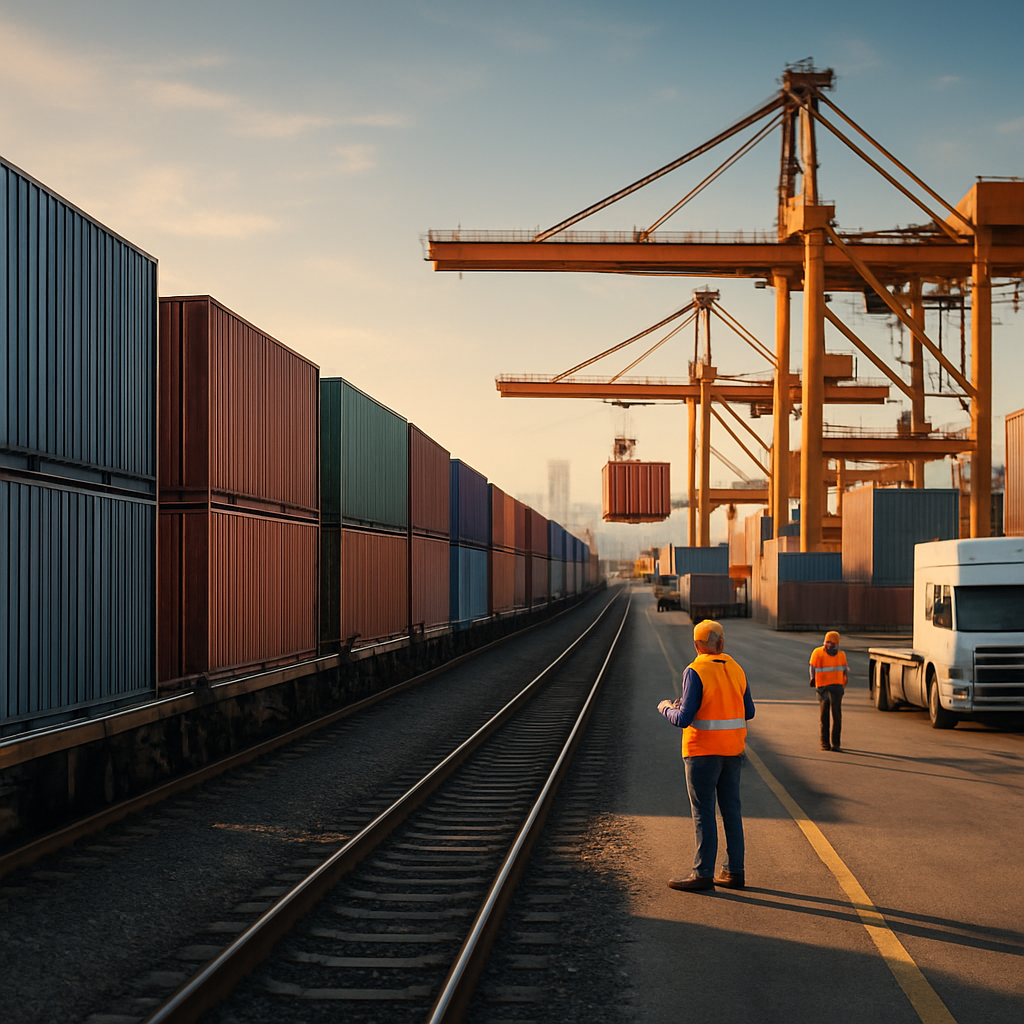
Port Rail Freight Services: Enhancing Import and Export Efficiency
Port Rail Freight Services: Enhancing Import and Export Efficiency
1. Faster Cargo Turnaround at the Port
Port rail freight services help importers and exporters clear containers from the wharf quickly, cutting delays and bottlenecks. On-dock and near-port rail terminals allow containers to be handled in blocks, reducing truck queues and double-handling. For time-sensitive freight transportation solutions, this means lower dwell times, fewer demurrage charges and more predictable cut-offs. Shippers can plan labour, warehousing and delivery windows with greater confidence, improving customer service and cash flow.
2. Lower End-to-End Transport Costs
Over medium and long-distance corridors, rail-based freight solutions usually offer sharper unit costs than road alone. By consolidating container volumes to trains, businesses can secure stable pricing on key port-to-warehouse logistics routes linking capital city terminals with inland hubs. This predictability supports more accurate landed cost models and tighter budgeting. In competitive export markets, even small per-container savings can materially improve margins and tender success rates.
3. Increased Capacity for Growing Trade Volumes
As trade volumes grow, major Australian ports are grappling with road congestion and limited curb space. Trains can move the equivalent of dozens of heavy vehicles in a single movement, providing scalable capacity during seasonal export peaks in agriculture, mining and manufacturing. For businesses seeking resilient logistics and supply chain strategies, shifting more volume to rail reduces exposure to road curfews and driver shortages. It also supports long-distance rail shipping across key inland corridors.
4. Reduced Road Congestion and Emissions
Moving containers by rail instead of road eases traffic pressure on urban freight corridors and port precincts. Rail freight typically produces significantly lower emissions per tonne-kilometre, making it a cornerstone of sustainable freight transport strategies. For organisations reporting under ESG frameworks, a higher rail share becomes a measurable indicator of progress towards decarbonisation goals. This aligns with broader australian logistics solutions policies aimed at cleaner, safer freight networks.
5. Improved Reliability and Supply Chain Resilience
Modern port rail precincts support frequent, scheduled services between terminals, intermodal hubs and regional centres. These services reduce vulnerability to road incidents, congestion and peak-hour restrictions that can derail delivery schedules. By integrating port rail freight into intermodal shipping services, shippers gain more predictable transit times and clearer escalation paths when disruptions occur. This level of control underpins end-to-end supply chain visibility across domestic and international routes.
6. Better Integration with Intermodal Terminals
Intermodal terminals connect port rail freight services with warehousing, distribution centres and regional rail lines. By consolidating import and export flows at these hubs, businesses can streamline inspections, improve container utilisation and cut empty repositioning. Evaluating intermodal rail freight options, terminal locations and value-added services is crucial when designing integrated freight logistics strategies. For more on the strategic role of Rail Freight in Australia within national networks, see the federal National Freight and Supply Chain Strategy. Independent research bodies such as Infrastructure Australia also provide data on network performance and future demand.
- Assess whether your current port access is constrained by road congestion or curfews and model savings from mode shift.
- Compare competing port-aligned operators on service frequency, transit times and container handling capabilities.
- Look for providers offering integrated planning across road, rail and warehousing to simplify port-to-door coordination.
- Prioritise partners that can demonstrate strong safety, compliance and ESG reporting credentials.
- Confirm that your rail partner can scale quickly during seasonal peaks without compromising reliability.
Choosing the right partner for Rail Freight in Australia can transform how your containers move between ship, rail and road. A specialist provider with deep experience in port rail freight services can tailor solutions that balance cost, reliability and sustainability for your business. If you are ready to redesign your port rail strategy or explore new capacity, speak with a freight specialist today to discuss a customised solution for your import and export operations.

Related posts
Sustainable Rail Solutions: Reducing Carbon Footprint in Freight Transportation
In an era marked by environmental concerns, finding sustainable solutions for fr
European Rail Operators Increase Cargo Traffic from China
European rail freight may have been having a torrid time recently, but it appear
Bulk Freight by Rail: Efficient Solutions for Heavy Cargo
Learn how bulk freight by rail helps Australian businesses move heavy cargo effi
