




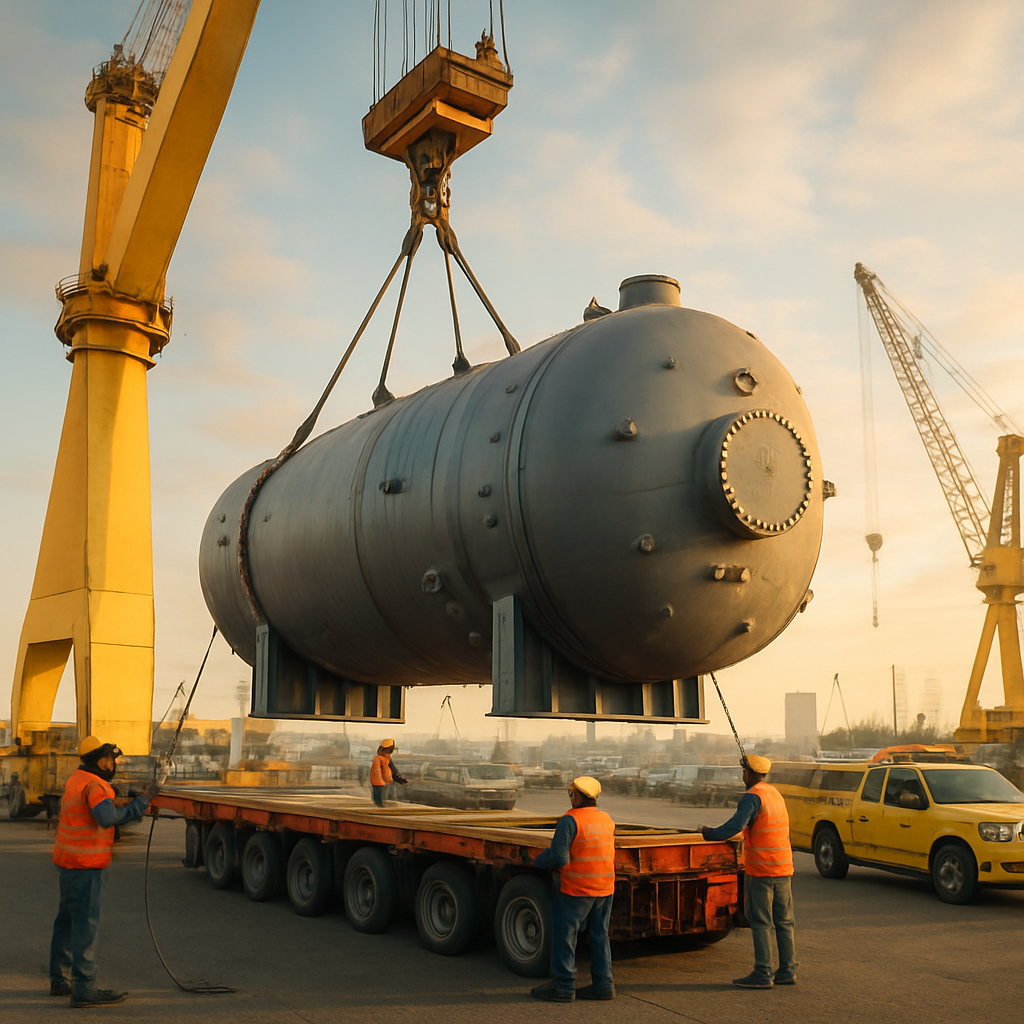
Oversized Cargo Transport: Essential Tips for Safe Delivery
Oversized cargo transport in Australia is no longer a niche operational task; it is a strategic risk issue that directly influences capital project outcomes, stakeholder confidence and regulatory exposure. As energy, resources and infrastructure projects increase in scale and complexity, boards are discovering that traditional road freight assumptions simply do not apply to abnormal loads moving through dense, highly regulated corridors.
Oversized freight is no longer about “getting it there somehow”; it is about engineering-led decisions that stand up to regulatory scrutiny and commercial reality.
What distinguishes high-performing organisations is their willingness to treat heavy haulage as a core part of Project Logistics rather than a late-stage procurement exercise. This mindset connects route engineering, supply chain management, risk and community engagement, enabling executives to see the true exposure associated with a single delayed component or constrained corridor. When project teams embed oversized cargo thinking into early feasibility, they reduce downstream rework, claims and reputational damage.
Oversized cargo transport as a board-level risk
Oversized cargo transport now sits alongside industrial safety and environmental performance in board risk registers. Tightening expectations from the National Heavy Vehicle Regulator, combined with more assertive enforcement of chain-of-responsibility laws, mean decision-makers cannot outsource accountability to carriers. Directors increasingly want evidence that route options, permits and transportation solutions have been engineered, not improvised.
Engineering-led planning and digital innovation
Leading organisations are integrating swept-path analysis, bridge assessments, clash checks and oversized load routing services into front-end project design. Field surveys are being augmented with LiDAR scans, 3D modelling and real-time telematics, giving planners a digital twin of the corridor. This supports more robust permitting, reduces guesswork and allows industrial freight forwarding experts to simulate alternative project cargo transport solutions before committing to on-road execution.
A strategic view also recognises the value of multimodal freight coordination, particularly when ports, rail and last-mile road legs must align around narrow construction windows. Well-governed integrated project supply chains use consistent risk assumptions, shared data and end-to-end logistics management frameworks to avoid siloed decisions. For complex programs, remote site logistics support becomes decisive, ensuring that craneage, laydown space, escorts and local utilities are all synchronised with heavy lift transportation solutions.
Regulation, community expectations and emerging standards
Regulatory compliance is now intertwined with social licence. Australian communities are less tolerant of poorly communicated night movements, noise and traffic disruption, and regulators are responding. Referencing guidance from bodies such as the National Heavy Vehicle Regulator and the Australian Trucking Association helps organisations benchmark their freight forwarding services and oversized practices against evolving national expectations and evidence-based safety principles.
Next steps: building a future-ready oversized freight strategy
For capital-intensive sectors, now is the moment to test whether oversized planning truly matches project risk. Reviewing your heavy haul strategy, governance and contractor ecosystem against emerging best practice in project cargo transport solutions will reveal capability gaps long before mobilisation. To explore how a more integrated approach to oversized cargo transport can strengthen project outcomes and on-road safety, consider speaking with specialist advisors and reviewing your current operating model against contemporary Australian standards.

Related posts

Disruption Warning for Roads, Trains, Ports Due to Pro-Palestine Protests
Police and shipping operators are bracing for parts of the city and the Port of
Building Success: Project Logistics Strategies for Construction Projects
In the dynamic realm of construction projects, the significance of project logis
Navigating 2025 Global Shipping Trends: Peak Season & Trade Shift
Navigating the High Seas — Global Supply Chain & Logistics Dynamics USA &a
