




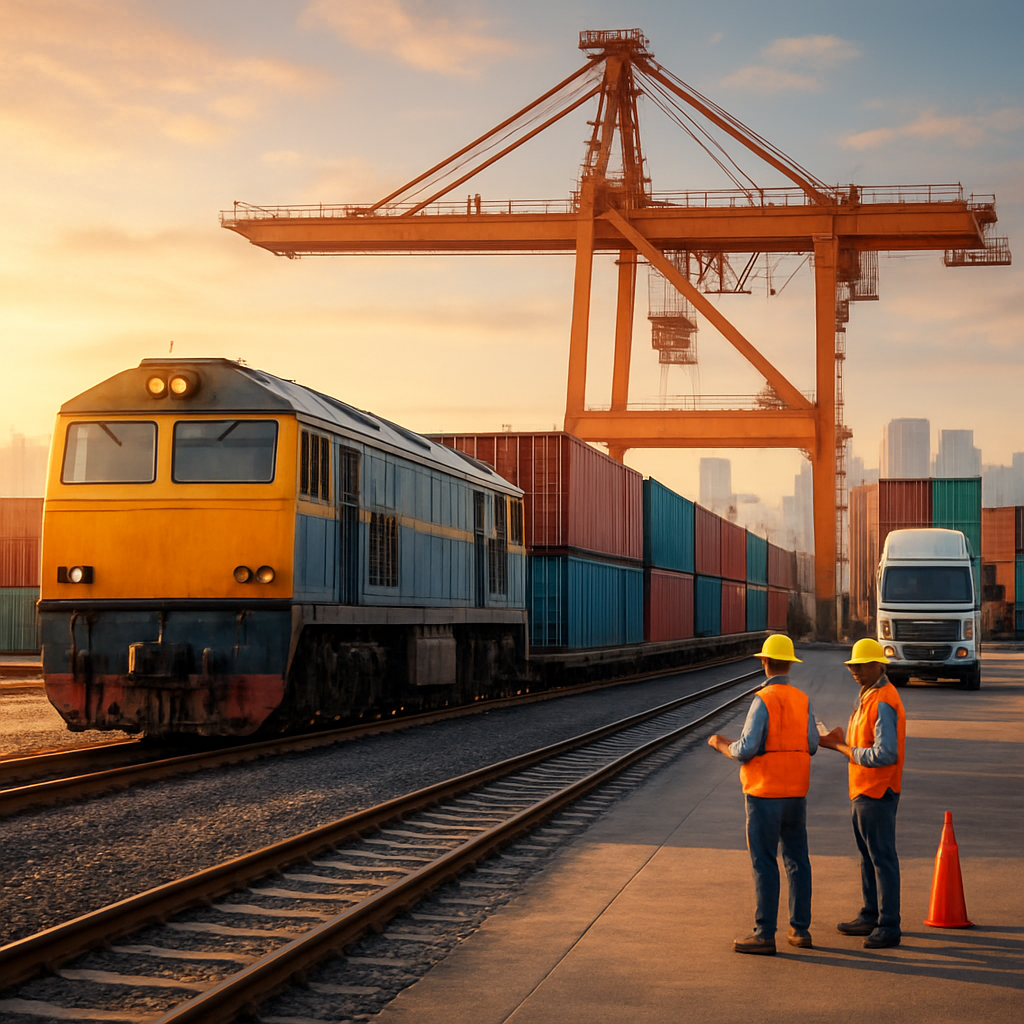
What Affects Rail Freight Costs? Key Pricing Factors Explained
What affects rail freight costs in Australia is often less obvious than distance alone. Many companies focus on the headline rate and miss how route constraints, fuel, terminals and service choices quietly push up the real price. This lack of visibility makes it difficult to compare quotes, benchmark performance, or build reliable budgets, especially for businesses scaling up their use of Rail Freight across regional and capital city corridors.
- Hidden infrastructure and access charges
- Inefficient volume and loading patterns
- Specialised equipment and handling needs
- Fuel surcharges and terminal add-ons
- Premiums for speed, reliability and tight delivery windows
Understanding Rail Freight Pricing in Australia
In Australia, rail freight pricing is shaped by an intricate mix of infrastructure, operating conditions and commercial risk. While distance still matters, the bigger issue is how multiple small cost drivers accumulate across your wider logistics and supply chain. Without a clear breakdown, businesses can misinterpret “expensive rail” as a single problem, when the real issue is an opaque cost structure that hides where efficiency improvements are possible.
Distance, Route and Market Access: More Than Just Kilometres
Longer hauls should, in theory, improve long-distance freight cost control, but only if the route is efficient. Older regional lines, steep grades and congested junctions can result in higher access fees, slower speeds and timetable inflexibility. Shippers moving export commodities to ports often discover that a few problematic sections of track, or limited market access to alternative operators, account for a large share of annual overruns.
Volume, Load Efficiency and the Cost of Irregular Demand
Train economics depend heavily on how full and how consistently services run. Irregular volumes, last-minute changes and part-loads can undermine otherwise cost-efficient logistics strategies. Operators may spread the cost of spare capacity across fewer customers, driving up per-tonne rates, while poor wagon utilisation and loading imbalances add to wear, safety checks and delays that quietly erode margins on both sides of the contract.
Cargo Type, Fuel and Terminal Charges: The Overlooked Multipliers
Specialised freight such as dangerous goods or chilled produce often requires tailored wagons and strict handling rules that raise compliance and insurance costs. At the same time, fuel surcharges move with global energy markets, and terminal fees for lifting, storage and shunting vary widely between locations. Taken together, these factors can make competing freight transportation solutions look incomparable unless every quote is itemised and assessed on a like-for-like basis, supported by reputable data sources such as the Bureau of Infrastructure and Transport Research Economics at https://www.bitre.gov.au/.
For many operators, the real challenge is knitting these elements into intermodal shipping services with predictable performance. Businesses juggling road legs, port slots and rail-linked distribution networks may not see where delays or bottlenecks on one mode inflate total system costs. Without integrated freight transport planning, even minor timetable changes or terminal congestion can ripple through production, inventory and delivery commitments.
Why Lack of Transparency Is a Strategic Risk
When rail quotes arrive as single-line figures, it becomes almost impossible to pursue rail-focused supply chain optimization or robust industrial cargo transport planning. Companies may lock in multi-year contracts without understanding which levers they can adjust, from service frequency to wagon configuration or sustainable rail freight options. Over time, these blind spots limit the potential of end-to-end intermodal logistics and undermine long-term competitiveness.
Warning signs include frequent invoice disputes, inconsistent margins on similar routes, and difficulty comparing operators or testing new routes. If your team cannot explain the main cost drivers on each lane, you may already be missing realistic opportunities to refine integrated freight transport planning or explore more sustainable rail freight options that better align with your long-term rail-linked distribution networks and long-distance freight cost control goals.
Before committing to new contracts or network changes, assess whether you have sufficient visibility to model scenarios and stress-test assumptions. If not, this is the time to speak with an independent expert, review your current Rail Freight arrangements, and seek guidance on building more transparent, data-backed cost frameworks so your next move strengthens both resilience and profitability.

Related posts
On Track for Success: Strategies for Efficient Rail Freight Planning
Rail freight planning is a critical aspect of logistics, playing a pivotal role
Impact of E-Commerce Growth on Logistics Companies
The impact of e-commerce growth on Logistics companies in recent years has been
Cargo on Rails: Maximizing Efficiency in Rail Freight Operations
In the dynamic world of logistics, efficiency is the cornerstone of success. Whe
