




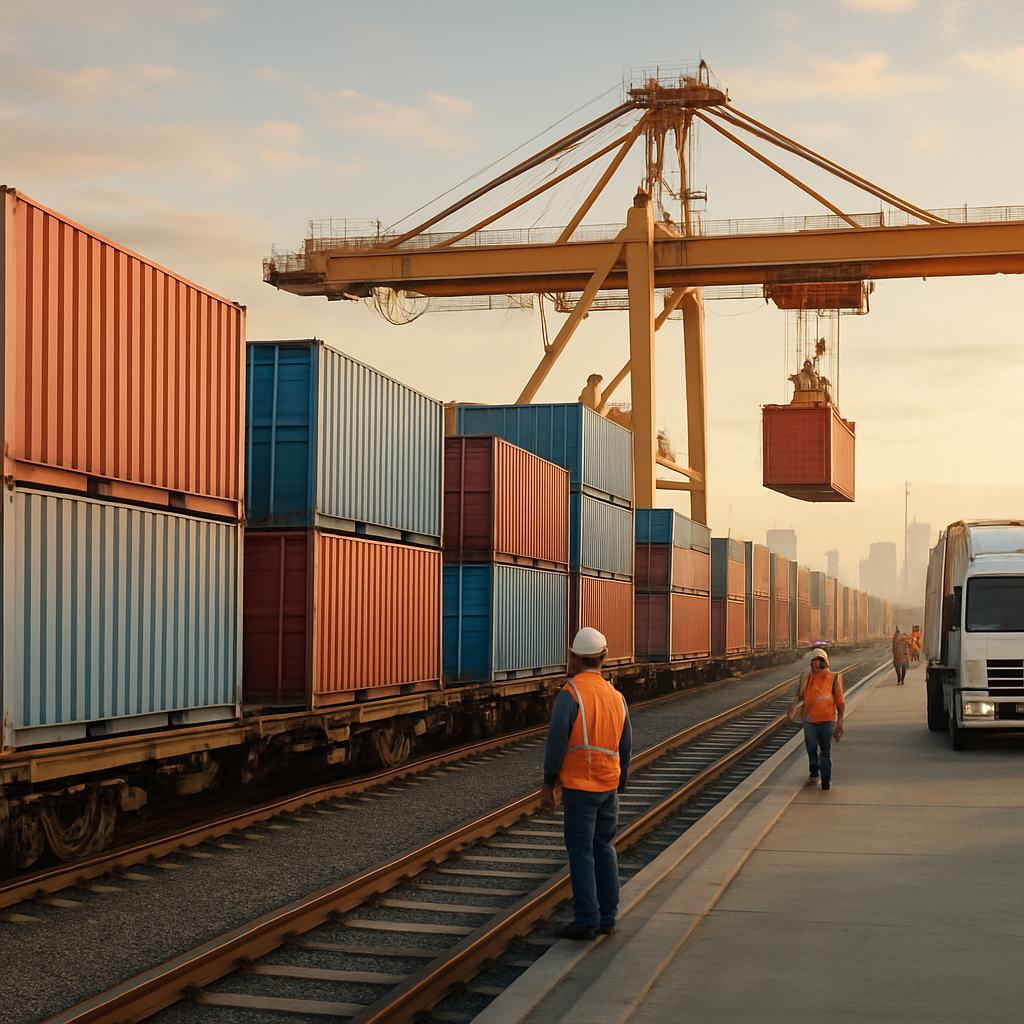
How Rail Freight Works: Key Insights for Logistics Managers
Australian logistics managers are quietly facing a strategic blind spot: underestimating Rail Freight in long-distance network design. As freight volumes rise and emissions pressures tighten, relying on road-only linehaul is becoming a structural risk rather than a neutral choice. What appears to be operational convenience today can quickly turn into higher costs, constrained capacity and weaker ESG performance over the rest of the decade.
- Rising exposure to fuel and road pricing volatility on long-haul lanes.
- Capacity bottlenecks on key east–west and north–south corridors.
- Difficulty meeting tightening emissions and ESG expectations.
- Persistent driver shortages and fatigue-related safety concerns.
- Missed savings and resilience gains from multimodal freight logistics.
How Rail Freight is changing Australia’s freight task
Far from being a niche option for miners, Rail Freight now underpins critical containerised and intermodal flows across the country. Modern services link capital cities with regional terminals, supporting more sophisticated logistics and supply chain designs than many operators realise. According to the Australasian Railway Association, rail can produce dramatically lower emissions per tonne-kilometre than heavy vehicles, reinforcing its role as a backbone mode for sustainable growth.
Why road-only planning creates hidden operational risks
When freight transportation solutions default to trucks, businesses absorb risks that compound slowly but significantly. Linehaul legs running at or near capacity, escalating spot rates and persistent driver shortages all indicate structural over-reliance on road. High damage rates on long-haul lanes or recurring fatigue incidents suggest freight that may be better suited to more stable intermodal shipping services built around a rail spine.
Common misconceptions that keep rail off the table
Many planners still view rail as slow, inflexible and difficult to book, assumptions that rarely reflect current service standards. Fixed timetables and terminal cut-offs do require planning discipline, but integrated freight transportation networks increasingly offer competitive transit times on major corridors. Digital tracking, service level agreements and streamlined bookings now allow rail-focused supply chain strategy decisions to be made with clearer data and less administrative friction.
Warning signs your network is underusing rail
Several practical indicators point to missed intermodal rail shipping options within existing routes. These include chronic reliance on long-distance road legs into capital city depots, limited use of regional intermodal terminals, and repeated struggles to secure trucks during peak seasons. Businesses that never model cross-border intermodal rail or domestic alternatives often find their industrial freight logistics planning locked into higher-emission, higher-cost pathways.
Strategically, ignoring rail can hard-wire suboptimal distribution footprints that are expensive to unwind later. Distribution centres clustered purely around major road hubs may overlook locations that enable more efficient end-to-end logistics solutions anchored by rail. As governments invest in sustainable rail transportation services and upgraded terminals, operators that fail to test Rail Freight risk falling behind both on cost and compliance. To avoid this, review your top long-haul corridors, assess where intermodal rail could strengthen your network, and speak with an expert about realistic intermodal rail shipping options before constraints and costs escalate further.

Related posts
Digital Tracks: The Impact of Technology on Rail Freight Efficiency
In the fast-paced realm of logistics, the convergence of technology and rail fre
The Evolving Landscape of Road and Rail Freight: Trends and Challenges in 2024
The road and rail freight industry has always been the backbone of global trade,
Green Rails: Sustainable Practices in Rail Freight Transport
In an era where environmental consciousness is paramount, the railway industry h
