




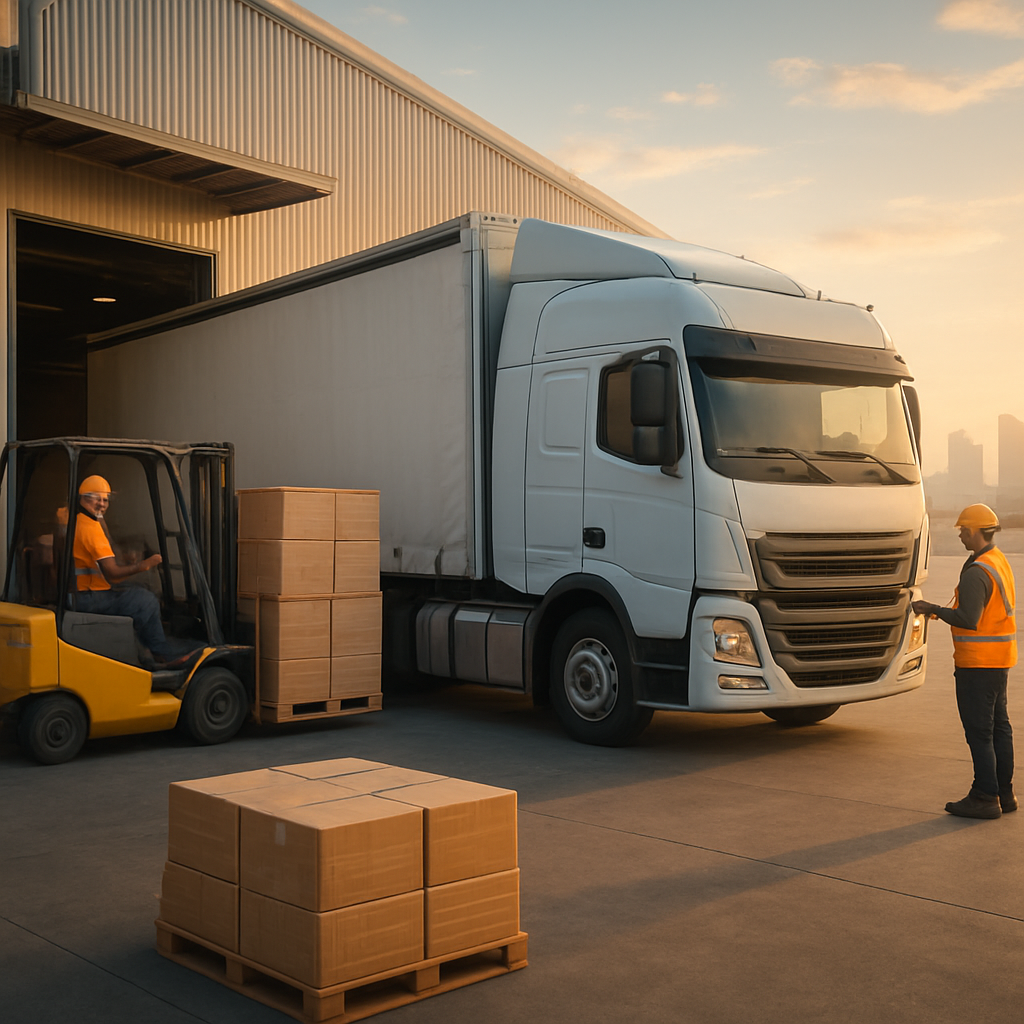
Road Freight vs Air, Sea, and Rail: Choosing the Best Option
In Australia, choosing between Road Freight and air, sea, and rail is no longer a simple cost-versus-speed decision. Vast distances, regional dispersion, and rising sustainability expectations mean transport strategy has become a board-level issue. Supply chain leaders now need to consider mode as part of an integrated network design, balancing service promises, volatility in global trade, and mounting pressure to decarbonise.
The most resilient Australian supply chains don’t ask “Which mode is cheapest?” – they ask “Which mix of modes protects margin, service, and sustainability over time?”
Within this context, road freight transportation services function as the connective tissue of the Australian network. Trucks bridge gaps between ports, rail terminals, airports, regional hubs, and final customers, converting bulk linehaul into precise deliveries. This role will intensify as omnichannel retail, just-in-time replenishment, and nearshoring drive demand for more granular logistics and shipping solutions across metropolitan and regional corridors.
Road Freight vs Air, Sea, and Rail: Strategic Mode Choices
Air is unmatched for speed but constrained by capacity, cost, and emissions, making it best reserved for truly urgent cargo delivery options such as critical medical supplies or high-value spares. Sea remains indispensable for international flows, yet port congestion and schedule slippage since COVID-19 have exposed the fragility of extended ocean-dependent chains. Rail’s strength lies in long-haul efficiency and lower emissions, particularly on east–west and north–south corridors carrying heavy, predictable volumes.
Optimising the Mode Mix in Australian Supply Chains
The opportunity for Australian shippers lies in blending these modes through integrated logistics and freight services, rather than treating them as competitors. For example, rail or sea can handle base-load volumes while flexible road-based cargo delivery options cover variability, surge events, and tight delivery windows. Data-rich planning tools and telematics now allow businesses to model total landed cost, risk, and carbon across alternative road freight shipping options and multimodal combinations.
Leading organisations are rethinking freight transportation services as a portfolio, not a series of ad hoc bookings. They are segmenting flows by value density, volatility, and service criticality, then aligning each segment with the most suitable road transport delivery solutions or intermodal approach. This is particularly powerful when combined with domestic freight logistics solutions that synchronise inbound containers, intermodal transfers, and last-mile runs into a single, visible control tower.
To strengthen decision-making, supply chain leaders should benchmark mode performance using credible references such as the International Transport Forum while also reviewing how Road Freight supports their broader end-to-end logistics and shipping ambitions. Now is the time to reassess your network design, validate your current cargo mix, and engage specialists who can help you stress-test scenarios and unlock more resilient, lower-carbon road freight transportation services for the decade ahead.

Related posts
Fueling Strategies for Sustainable Road Freight Operations
In the dynamic landscape of road freight operations, achieving sustainability an
Driver Safety: Comprehensive Road Freight Security Measures
In today’s fast-paced world of logistics, driver safety goes beyond naviga
Understanding Road Freight Basics: A Guide for New Businesses
Understand road freight basics in Australia with this practical guide for new bu
