




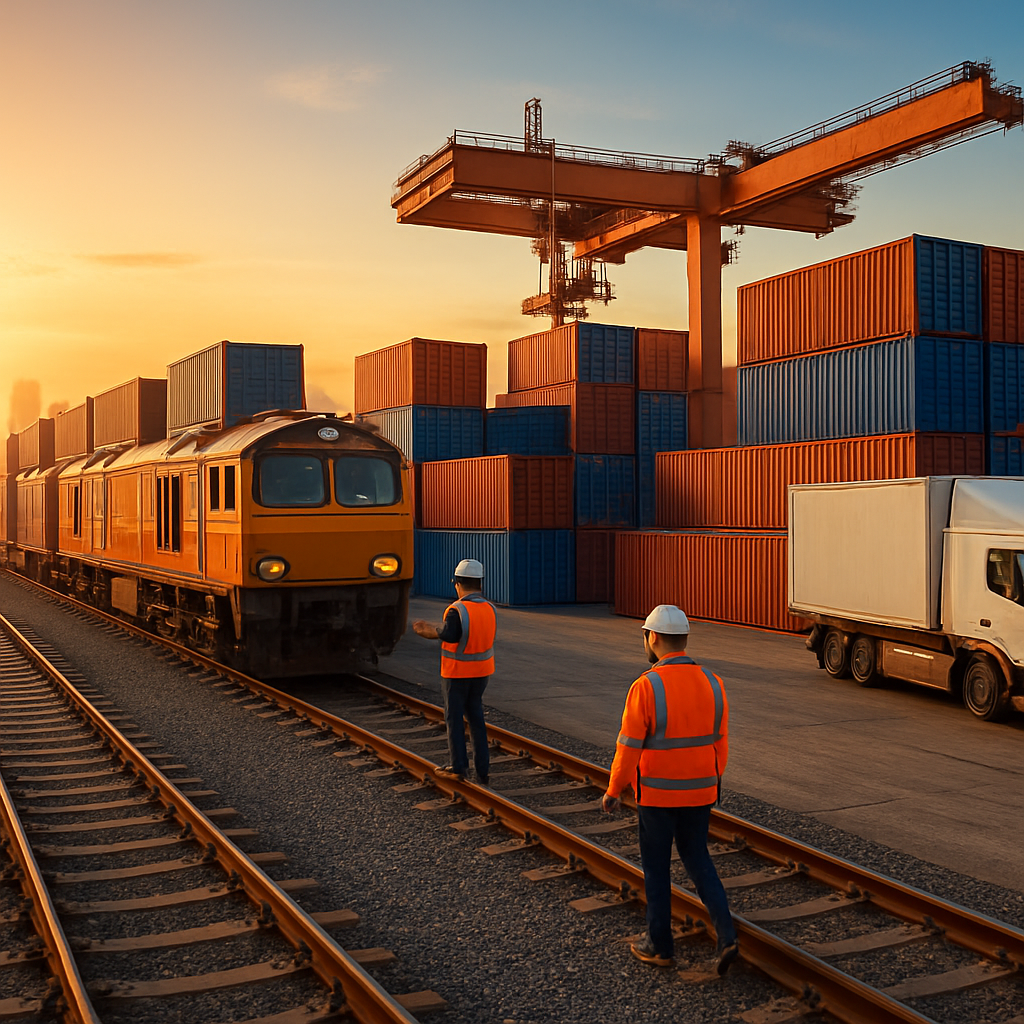
Rail vs Road Freight: Choosing the Best Option for Your Cargo
Rail vs Road Freight: Choosing the Best Option for Your Cargo in Australia is now a strategic decision, not a tactical afterthought. With fuel price volatility, decarbonisation pressures, and infrastructure investment reshaping the market, transport leaders must evaluate each mode’s role in their broader logistics and supply chain design.
“The question is no longer ‘rail or road?’, but how to orchestrate both modes into a resilient, low-carbon, and commercially viable network.”
In this environment, relying on historical preferences or one-off rate comparisons is risky. Freight decision-makers need dynamic, lane-by-lane models that incorporate service reliability, emissions intensity, and network resilience alongside price. The businesses setting the pace treat mode selection as a core element of their freight transportation solutions, not just a procurement outcome.
Rail vs Road Freight in a Changing Market
For long-haul and heavy loads, rail’s fuel efficiency and scalability are difficult to ignore. Rail can dramatically reduce emissions per tonne-kilometre and support sustainable freight logistics targets, especially on repeatable east–west and north–south corridors. Road retains the edge for shorter hauls, time-critical freight, and regional access, but its exposure to congestion, driver availability, and road fatigue regulations must be factored into any rail based logistics strategy.
Designing a Blended, Future-Ready Network
The most progressive operators are building integrated freight transport models that blend rail linehaul with road first and last mile, often via intermodal shipping services and strategically located terminals. This unlocks multimodal freight options that balance cost, speed, and resilience. Evidence from Infrastructure Australia and other public sources shows that shifting suitable flows to rail can ease urban congestion and support industrial cargo transport growth along key freight corridors.
From an executive perspective, the critical shift is treating mode mix as a lever for risk management and value creation. Scenario modelling should test how carbon pricing, labour market changes, and projects like Inland Rail alter the optimal freight mix. Applying cost effective freight planning tools across your network can highlight lanes where intermodal rail freight services outperform pure road, both commercially and environmentally.
To move from concept to execution, leaders should benchmark current performance, quantify emissions, and assess where end to end logistics redesign could deliver step-change benefits. Engaging independent experts in Rail Freight can help validate assumptions, stress-test options, and craft a pragmatic roadmap. Now is the right time to review your freight strategy, challenge legacy modes, and commit to a more resilient, data-driven freight transportation approach.

Related posts
On the Right Track: Exploring the Advantages of Rail Freight
In today’s fast-paced world, efficient transportation of goods is the back
How Automation is Transforming the Road and Rail Freight Industries
The road and rail freight industries are the lifeblood of global commerce, ensur
The Evolving Landscape of Road and Rail Freight: Trends and Challenges in 2024
The road and rail freight industry has always been the backbone of global trade,
