




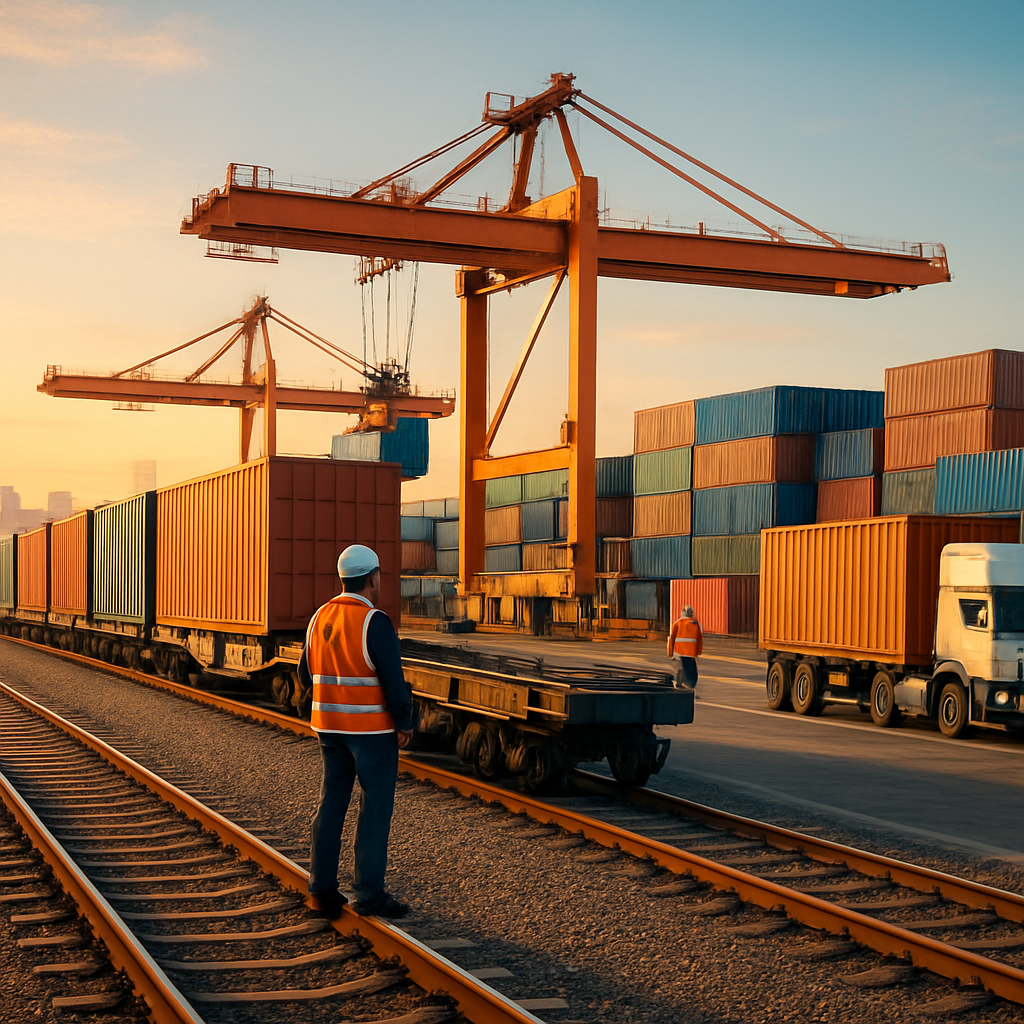
Intermodal Rail Freight: Connecting Australia’s Supply Chain
Intermodal rail freight in Australia is emerging as a strategic answer to rising transport costs, driver shortages, and mounting sustainability pressures on long-distance corridors. While rail currently carries most bulk commodities, non-bulk freight on key east–west and north–south routes is still dominated by road. This imbalance is pushing shippers, retailers, and manufacturers to reassess how rail-based freight transportation can fit into more resilient and efficient networks.
Intermodal rail freight in Australia: how the model works
At its core, intermodal rail combines high-capacity trains for the long haul with trucks for flexible first and last-mile delivery. Containers or trailers are loaded at an inland or port terminal, moved by rail across the country, then transferred back to trucks for final delivery. Modern intermodal rail shipping services rely on standardised equipment, scheduled services, and digital tracking so freight flows smoothly between modes. For shippers, this creates an alternative to purely road-based freight, particularly on transcontinental lanes where distance and volume justify a shift.
Comparing modal options for Australian shippers
Choosing between road, rail, or a combined rail and road freight transportation approach typically hinges on distance, freight profile, and service expectations. For freight under roughly 500 kilometres, direct trucking often remains the fastest and most flexible option. Beyond that, rail freight transportation solutions become increasingly cost-competitive, especially for palletised and containerised goods moving between capital cities. Intermodal shipping services can reduce linehaul costs, lower exposure to fuel price volatility, and cut emissions, though they may involve slightly longer transit times and stricter cut-off windows.
Key decision factors and emerging policy drivers
Businesses weighing freight transportation solutions are also watching major investments such as Inland Rail and new intermodal terminal precincts, which aim to improve reliability and capacity. These projects, supported by the National Freight and Supply Chain Strategy, are designed to make Rail Freight in Australia more attractive for non-bulk cargo. Companies with complex integrated logistics and supply chain operations increasingly assess options on whole-of-network performance, not just leg-by-leg rates. Factors like schedule frequency, container availability, digital visibility, and the ability to scale with seasonal peaks all shape which mode mix makes sense.
- National and regional intermodal rail shipping services linking major capitals and ports
- Intermodal container shipping services for palletised freight, FMCG, and manufactured goods
- Dedicated rail-based freight transportation options on east–west and north–south corridors
- Integrated end-to-end logistics and supply chain solutions with single-contract management
- Sustainable freight transportation solutions that cut emissions compared with road-only haulage
To navigate these choices, many shippers turn to specialist providers offering intermodal rail shipping services as part of broader logistics and supply chain strategies. These experts can compare service patterns, optimise routes, and manage containers across multiple carriers, while aligning with corporate emissions targets and reporting needs. Independent guidance is supported by public data from bodies such as the Bureau of Infrastructure and Transport Research Economics, which tracks national freight trends and performance. For organisations reassessing their freight strategy, the next step is to review corridor-by-corridor options and speak with an expert about the most suitable mix of modes for their network.

Related posts
Descartes Report Shows Robust Port and Imports Activity in May
Another month brought another strong month of United States-based imports, accor
Rail Freight Forwarding: Streamlining Your Supply Chain
Explore how Rail Freight forwarding in Australia can cut costs, reduce emissions
Impact of E-Commerce Growth on Logistics Companies
The impact of e-commerce growth on Logistics companies in recent years has been
