




Amazon FBA vs In-House Fulfillment: Pros and Cons for Sellers
Amazon FBA vs In-House Fulfillment: Pros and Cons for Sellers
Australian online retailers comparing Amazon FBA vs in-house options are essentially deciding how much control they want over storage, packing and shipping versus how much they are willing to outsource for scale and convenience. Both paths can work, but they suit different product profiles, growth stages and operational skills. Understanding how each model handles inventory, customer expectations and costs is crucial before committing capital to facilities or locking into long-term fee structures.
How Amazon FBA works for Australian sellers
Fulfilment by Amazon gives sellers access to Prime badges, centralised storage and streamlined shipping logistics services through Amazon’s local fulfilment centres. You ship products into the network, and Amazon manages picking, packing, delivery, customer service and returns. This model typically benefits brands with fast-moving, standard-sized items and predictable demand, where speed and trust signals are key to winning the sale. It can also simplify order processing solutions for smaller teams that lack in-house logistics expertise.
What in-house fulfilment offers growing brands
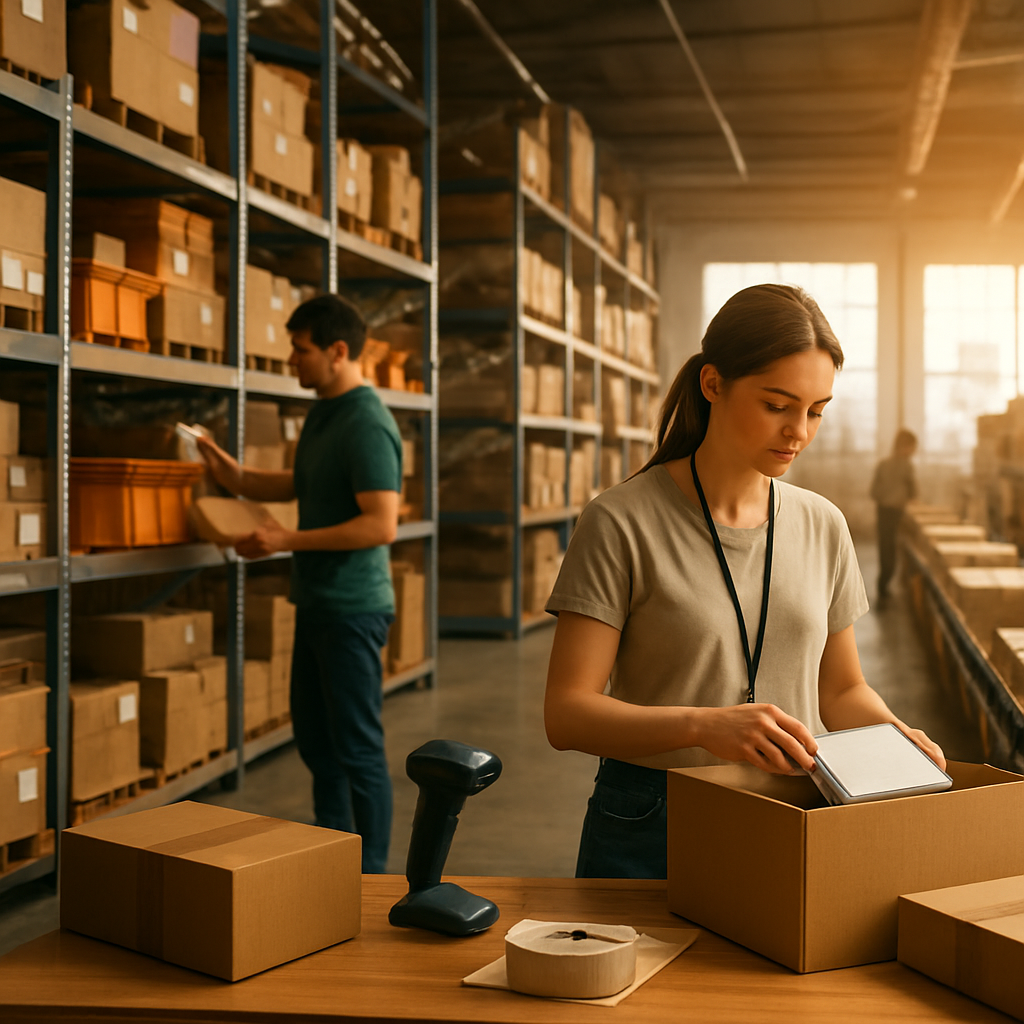
Running your own warehouse or stockroom allows closer control over branding, packaging and customer experience, including tailored inserts and bundled offers. Sellers can choose their own carriers, negotiate end-to-end shipping logistics, and deploy warehouse management systems that suit multi-channel operations across marketplaces and their own website. This route tends to favour heavier or bulky SKUs, niche catalogues and businesses that value flexibility in how they pick, pack and present orders. However, it demands investment in space, staff and technology, and exposes you to capacity crunches during seasonal peaks.
Key factors to compare before choosing a model
When evaluating Amazon FBA vs in-house options, sellers should weigh total cost per order, not just headline fees or rent. Consider how scalable order management workflows will cope with promotions, returns and spikes, and whether automated ecommerce order processing is essential to your growth plans. Think about how cloud-based warehouse management and inventory-driven warehouse automation might improve accuracy and reduce labour over time. You should also assess whether integrated fulfillment and shipping via third-party logistics solutions could offer a middle ground between full FBA and fully owned infrastructure.
- Estimate current and 12–24 month order volumes, split by channel.
- Model total landed cost per order under each fulfilment approach.
- Assess product size, weight and storage profile against fee structures.
- Review your capacity to manage staff, carrier contracts and technology.
- Identify where Amazon fulfillment, hybrid models or local partners best fit.
For additional context on delivery expectations and consumer behaviour, Australian sellers can refer to Australia Post’s ecommerce industry reports at https://auspost.com.au/business/business-shipping/sending-in-australia/ecommerce-industry-reports, which highlight trends in real-time order tracking tools and customer preferences. If you are unsure whether to lean into FBA, invest further in your own facilities, or explore a hybrid setup with selective third-party support, consider speaking with a specialist who can benchmark your numbers and design a fulfilment roadmap. A short consultation can clarify which mix of services and shipping logistics services will support sustainable growth without overextending your team or cash flow.

Related posts
Amazon Prime: Unraveling the Secrets Behind Lightning-Fast Order Fulfillment
In today’s fast-paced world, customers expect quick and efficient order fu
Delivering on Customer Expectations: Inside Amazon’s Fulfillment Strategy
Amazon, the world’s largest online marketplace, has revolutionized the ret
Amazon Fulfillment in Logistics – A Quick Guide on How to Get Started and How it Works
Fulfillment by Amazon (FBA) is a service provided by the e-commerce giant, Amazo
