




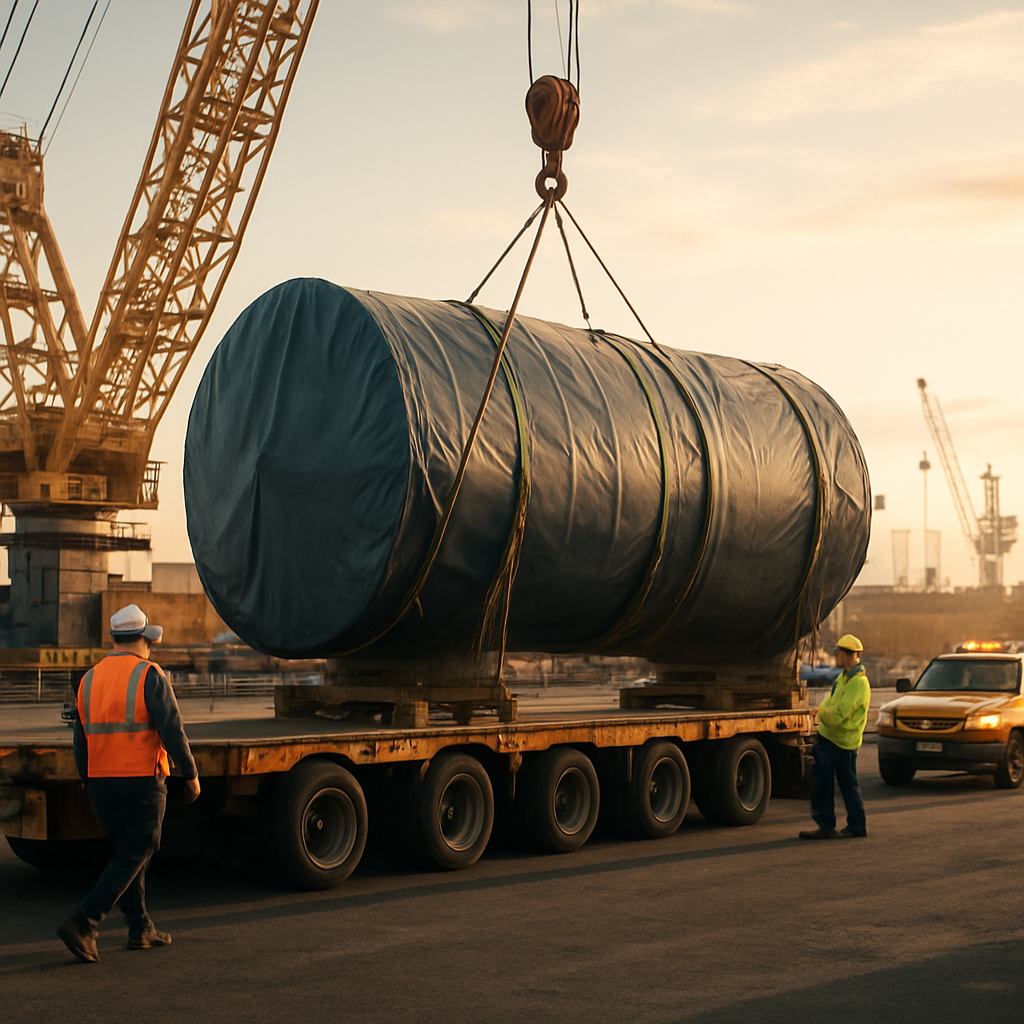
Break Bulk Shipping Explained: A 2026 Perspective
Break bulk shipping explained from a 2026 perspective is less about vessel space and more about hidden risk. Across Australia, renewable energy projects, mining expansions and major public works are pushing more oversized cargo through ports that were optimised for containers, not abnormal loads. Many shippers still treat break bulk as a simple variation on standard freight, overlooking how exposed they are to cost blowouts, damage and cascading delays.
Understanding break bulk shipping in Australia
In practice, break bulk shipping involves individual pieces too large or irregular for containers, such as nacelles, transformers and mining plant. These units demand specialised lifting gear, berth access and tightly sequenced road movements. The challenge is that engineering drawings rarely reflect the full picture of port crane reach, berth depth, tidal windows or local curfews, all of which shape safe and legal project cargo transportation.
- Budgets based on outdated container benchmarks rather than current multipurpose vessel markets.
- Assumed, not proven, port capability for lifting, storage and abnormal load access.
- Late engagement between design engineers and logistics teams.
- Underestimated timeframes for permits, escorts and route surveys.
- Minimal contingency for weather, industrial action or vessel slippage.
Why break bulk shipping is easy to misjudge
On paper, booking a heavy-lift vessel looks straightforward, especially to teams used to streamlined supply chain management and containerised freight. Yet the real risk sits in interfaces: where quayside operations meet road regulators, where design tolerances meet actual crane outreach, and where laydown areas are already congested by parallel projects. Without detailed industrial supply chain planning, even minor miscalculations can strand equipment offshore or on the wharf.
Early warning signs your strategy is fragile
Common red flags include treating break bulk cargo services as a last-minute add-on to contracts and assuming a carrier will “sort out” port handling. When engineering, procurement and logistics are siloed, loading plans are often finalised only after fabrication, leaving no room to redesign lifting points or packaging. That creates pressure on heavy lift freight management and can force expensive rework at Australian ports already operating near capacity.
The wider project impact of getting it wrong
When a single oversize unit misses a sailing window, there may be no immediate alternative within realistic cost or time. For construction, mining and energy developers, this can delay grid connections, commissioning schedules and progress payments. Liquidated damages clauses may be triggered long before anyone looks closely at complex freight forwarding decisions that set the chain of events in motion.
Why specialist planning matters more in 2026
In a market of tight vessel supply and stricter safety expectations, treating break bulk shipping as routine freight forwarding services is increasingly risky. Integrated Project Logistics brings engineering, permits, marine chartering and site readiness into one plan so multimodal transport planning and end-to-end project logistics are aligned with real-world constraints in Western Australia, Queensland and New South Wales. For broader context on global trends, industry analysis from the International Transport Forum at the OECD provides useful perspective on shifting trade and capacity dynamics at https://www.itf-oecd.org/.
Australian shippers evaluating transportation solutions should map every interface between design offices, fabricators, carriers and ports, then compare it with best-practice guidance from global logistics solutions specialists. If assumptions outweigh hard data, or if complex freight forwarding decisions are being made late, it is time to stress-test your strategy before commitments are locked in. That review should also consider how project cargo transportation choices interact with national infrastructure priorities and regional port investment plans.
For businesses involved in break bulk shipping explained in this 2026 environment, the immediate priority is not chasing the cheapest charter but honestly assessing risk. If your team lacks in-house experience across break bulk cargo services, project cargo transportation and heavy lift freight management, speaking with an independent expert can surface blind spots early. Before your next oversize shipment is booked, schedule a structured review of your break bulk plan so small oversights do not escalate into delays, claims and lost opportunities.

Related posts
Cross-Border Compliance in 4PL: Navigating Customs, Carbon Rules, and Trade Shifts
Global trade has never been more interconnected—or more complex. With supply c
Operational Disruptions in the Middle East
Due to the rapidly evolving situation in the Middle East our network of logistic
Freight Spend Management Top Priority Amid Red Sea Crisis
Managing freight spend is the biggest concern for shippers and forwarders, as th
