




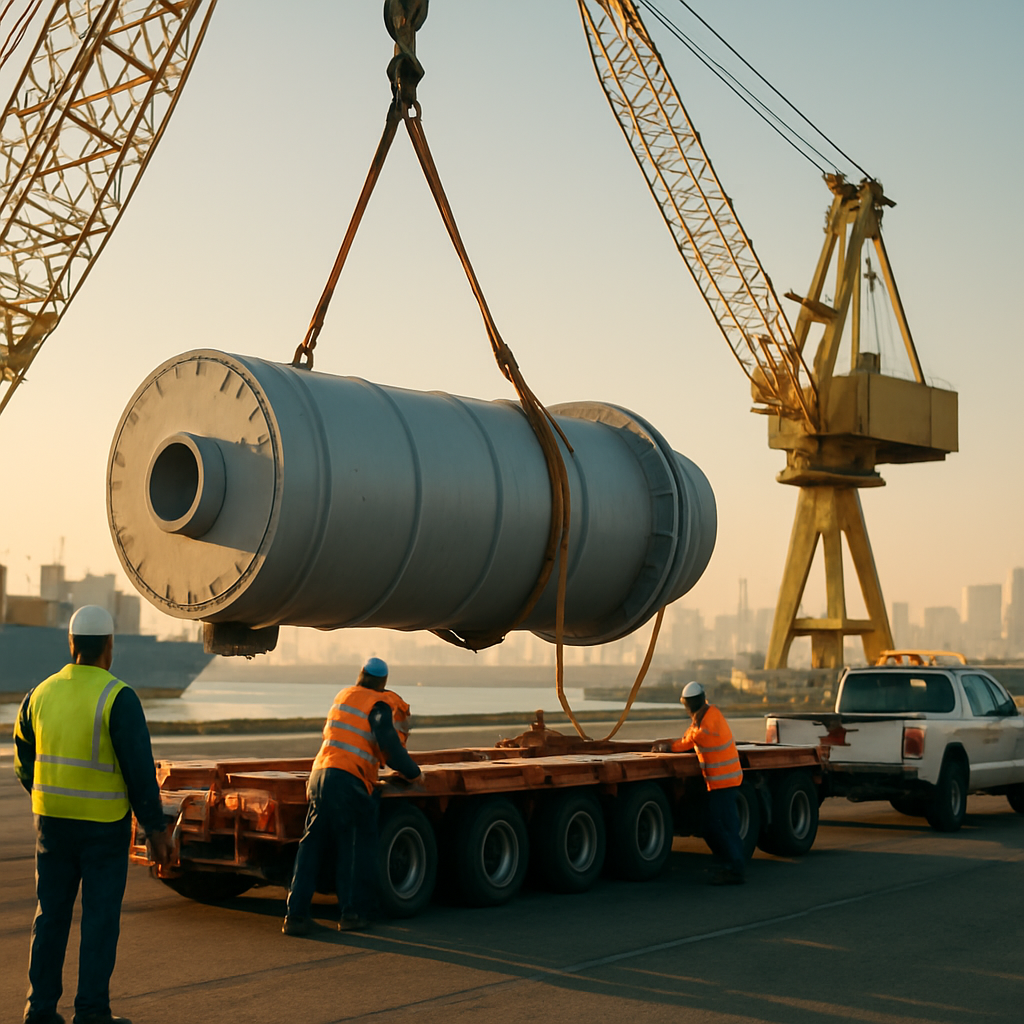
Bulk Cargo Movement: Trends and Best Practices for 2026
Australia’s bulk trade landscape is shifting quickly as decarbonisation, digitalisation, and resilience reshape how bulk cargo is planned and executed. In this context, bulk cargo movement: trends and best practices for 2026 are no longer theoretical—they are critical for shippers seeking predictable costs, lower risk, and reliable schedules. Choosing the right logistics partner now depends less on price alone and more on proven capability to manage volatility, regulation, and operational complexity.
Bulk Cargo Movement: Trends and Best Practices for 2026
By 2026, Australian exporters will confront modest volume growth but more complex trade patterns, longer routes, and tighter environmental scrutiny. Traditional freight forwarding services often focus on transactional tasks, leaving shippers to manage planning, risk allocation, and performance visibility themselves. A differentiated partner instead connects vessel chartering, port operations, and inland haulage into a coherent supply chain management approach, ensuring that commercial decisions align with physical constraints across mines, terminals, and rail networks.
The most significant distinction between providers lies in how deeply they integrate planning, data, and operational execution. Many transportation solutions still rely on fragmented systems and manual spreadsheets, increasing the chance of demurrage, congestion, and misaligned laytime terms. In contrast, a genuinely strategic model leverages integrated project logistics and scenario analysis to select optimal vessel classes, loading plans, and routing options tailored to each commodity, port, and season.
- Embedding emissions and performance data into voyage and port planning from the outset.
- Using digital tools to simulate different cargo programs and chartering strategies.
- Coordinating rail, road, and marine assets to minimise idle time and delays.
- Aligning contractual terms with realistic port productivity and weather risk.
- Providing transparent reporting so stakeholders can benchmark operational outcomes.
Decarbonisation, Digitalisation, and Risk Control
Decarbonisation and ESG expectations mean bulk operators must now evidence their emissions profile as clearly as their freight rates. Leading teams incorporate just-in-time arrival principles, weather routing, and fuel-efficient loading plans while maintaining strict safety standards. External guidance from the International Maritime Organization helps shape compliant strategies and provides a benchmark for responsible operations across every project cargo supply chain.
How Our Approach Creates Competitive Advantage
Our Australian-based specialists differentiate themselves by combining marine chartering expertise, port engineering capability, and advanced analytics within a single accountable framework. This integrated model allows Project Logistics decisions to be tested against real terminal capacities, draft limitations, and berth windows before commitments are made. The result is complex freight management that reduces exposure to congestion, unplanned re-routing, and last-minute cost escalation.
- Designing industrial cargo solutions that match vessel selection to each port’s constraints and commodity profile.
- Coordinating heavy lift transportation and loading sequences to protect cargo integrity and schedule.
- Delivering end-to-end freight coordination that links mine, rail, road, and berth plans in one view.
- Providing specialised freight forwarding expertise for out-of-gauge or sensitive bulk-related equipment.
- Applying cost-effective transport planning that balances freight rates, fuel burn, and emissions objectives.
For Australian shippers evaluating partners, the key decision factors are transparency, technical depth, and alignment with corporate sustainability goals. Our formal reporting structure offers clear visibility of laytime exposure, emissions intensity, and port performance, giving stakeholders objective data for board-level decisions. If you are reviewing options for bulk cargo movement: trends and best practices for 2026 and beyond, we invite you to compare approaches, ask detailed questions, and speak with our team about a tailored consultation that matches your operational risk profile and growth plans.

Related posts
Supply Chain Optimization: Maximizing Efficiency and Minimizing Costs
In today’s competitive business landscape, supply chain optimization plays
FMC Implements New Rules on Detention and Demurrage
The US Federal Maritime Commission (FMC) revision to detention and demurrage (D&

Op-Ed: China Headed for a Major Recession
The risk of China spiralling into an unprecedentedly prolonged recession is incr
