




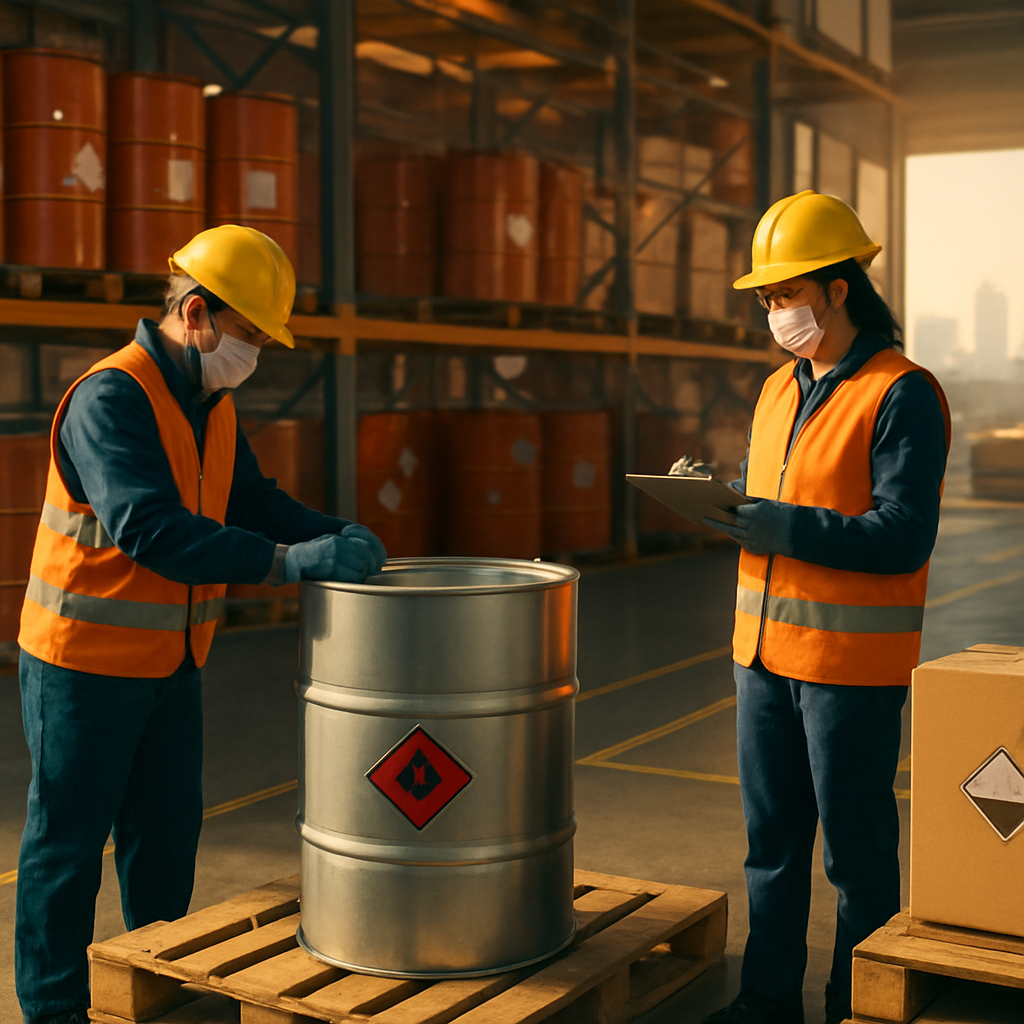
Customs Clearance for Hazardous Goods: A Comprehensive Guide
Customs clearance for hazardous goods in Australia demands more than standard brokerage; it requires specialised regulatory knowledge, disciplined risk management and precise documentation. Businesses moving chemical, clinical or industrial consignments must align with Australian Border Force requirements, the Australian Dangerous Goods Code, Work Health and Safety legislation and international chemical transport standards. Choosing a partner with proven expertise, transparent processes and technology-enabled oversight can materially reduce delays, storage costs and operational disruption.
Customs clearance for hazardous goods: how providers differ
For importers and exporters, the main distinction between providers is how thoroughly they interpret and apply shipping regulations for chemicals. General brokers often treat dangerous cargo like any other shipment, relying on basic declarations supplied by shippers. In contrast, a specialised service embeds dangerous materials handling, classification and permit checks at the start of the process, before cargo is booked or loaded, preventing costly rework at the border.
Another key differentiator is how well a provider understands and implements chemical cargo compliance rules across modes. Air, sea and road movements each carry specific documentation formats, quantity thresholds and packaging expectations. Providers that can harmonise these requirements across the supply chain significantly reduce the risk of conflicting data, refusals of entry or re-labelling at terminals.
Beyond technical compliance, responsiveness and communication also separate high-performing partners. Businesses need advance visibility of permit lead times, inspection risks and warehouse cut-offs to plan production and delivery. A broker with structured status reporting and clear escalation paths will normally outperform ad hoc, reactive operators when exceptions arise.
- Early verification of classifications and permits before shipment confirmation
- Consistent review of safety data sheets and packing declarations for accuracy
- Integrated technology to reconcile invoices, packing lists and hazard data
- Proactive advice on storage, quarantine and security screening risks
- Structured communication with terminals, carriers and regulators
Risk-focused brokerage built for dangerous goods
Our service model is designed around hazardous materials transport safety rather than retrofitting general freight processes. Every file is opened by a licensed customs broker with specialised dangerous goods training who validates UN numbers, packing groups and limited quantity provisions. They conduct formal compliance checks for dangerous goods against Australian and international references before any lodgement occurs.
This approach supports dangerous goods transport best practices by addressing issues while cargo is still under the shipper’s control. Misaligned classifications, incomplete permits or inconsistent packaging descriptions are corrected collaboratively, avoiding last-minute re-work under terminal time pressure. Clients benefit from fewer holds, more predictable clearance windows and reduced exposure to penalties for misdeclaration.
Technology, local expertise and transparent pricing
Technology is central to our differentiation. Integrated data validation tools automatically compare commercial documentation, declarations and safety protocols for transport, flagging discrepancies before submission to authorities. Clients receive real-time visibility from pre-lodgement to final delivery, enabling them to manage production schedules and customer commitments with confidence.
Our team keeps pace with regulatory guidelines for hazardous shipments, monitoring government releases and industry bulletins, including updates to the Australian Dangerous Goods Code issued by the National Transport Commission at https://www.ntc.gov.au/codes-and-guidelines/australian-dangerous-goods-code. This ongoing monitoring supports safe handling of chemical cargo across domestic and international legs. Pricing is equally transparent, with clear separation of government disbursements, terminal charges and professional fees so you can accurately compare providers.
- Detailed breakdown of all clearance, terminal and government charges
- Scenario-based advice on potential quarantine or security interventions
- Guidance on chemical freight safety procedures and documentation standards
- Assessment of carrier and route options for Hazardous Goods shipments
- Support in aligning internal processes with safe, compliant export and import workflows
If you are planning your next hazardous consignment, use these decision points to compare your options and select a broker with proven depth in dangerous cargo. Our team can review your classification, permits and documentation, explain the practical trade-offs between speed, cost and risk, and design a customs clearance strategy tailored to your operations. Contact us today to discuss your upcoming shipment and move forward with greater certainty and control.

Related posts

Brown Marmorated Stink Bug (BMSB) Season 2025-26
The Department of Agriculture have released the measures for Brown Marmorated St

Essential Permits and Certifications for Hazardous Goods Transport
Understand essential permits and certifications for Hazardous Goods transport in
2026 Dangerous Goods Classification: What You Need to Know
Stay ahead of 2026 Dangerous Goods classification changes in Australia. Learn th
