




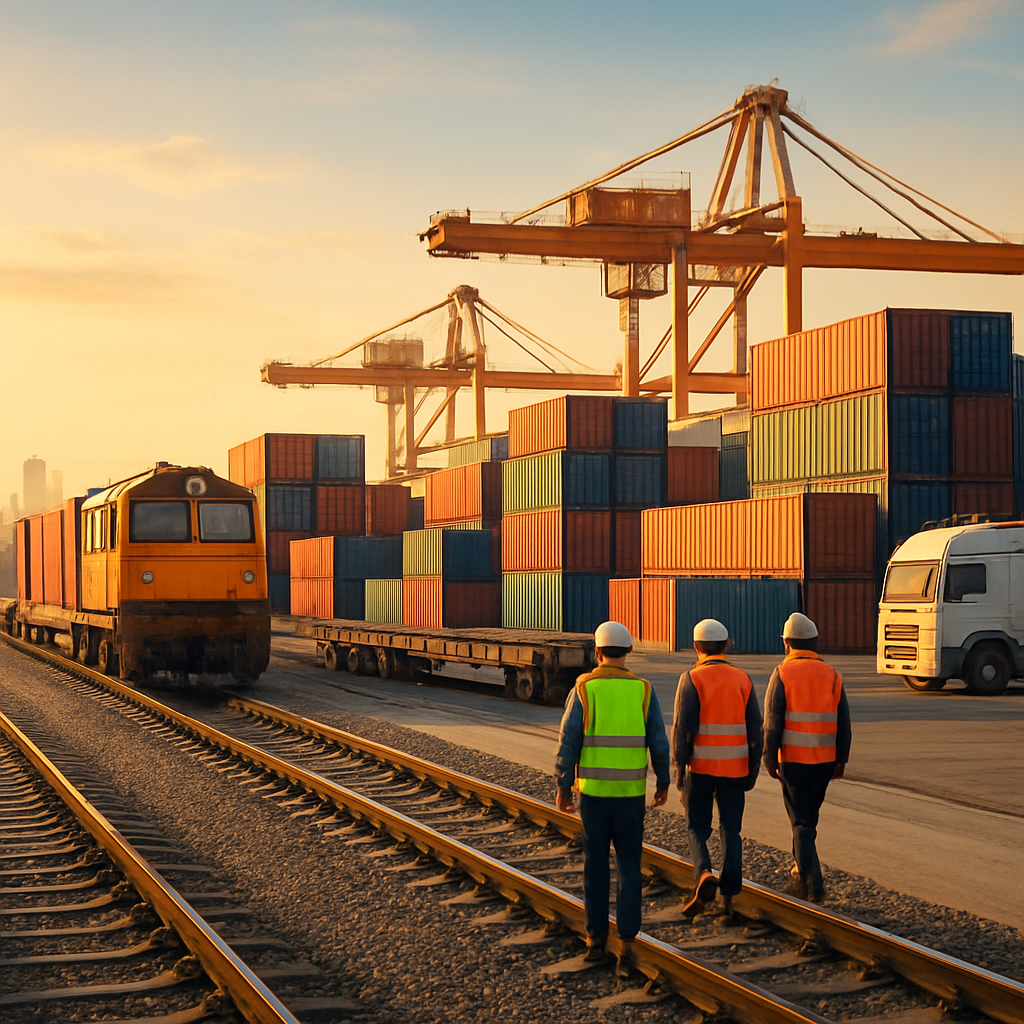
Sea Freight vs Rail Freight: Which is More Cost-Effective?
Sea Freight vs Rail Freight: Which is More Cost-Effective? For many Australian businesses, this question reflects a deeper concern: how to control total landed cost without exposing your operations to delays, hidden fees, or service failures. Comparing modes is only useful when it’s grounded in clear data, transparent pricing, and a provider that explains exactly how your freight will move from origin to destination.
Trust is built when you can see every step of the journey, understand every charge, and know who is accountable at each handover.
Sea Freight vs Rail Freight Cost Drivers
When assessing sea freight and rail costs, a trusted provider will map your entire route, including pre-carriage, terminal handling, and final delivery. Instead of quoting a single port-to-port rate, they break out port fees, container packing, documentation, and any potential biosecurity inspections. This clarity helps you compare realistic freight transportation solutions rather than headline rates that ignore on-the-ground realities.
How a Transparent Process Reduces Risk
A credible logistics partner will start with a discovery discussion focused on your volumes, lanes, seasonality, and service expectations. From there, they use end-to-end logistics planning to model different scenarios, showing how choices like service level, transit time, and consolidation affect cost and reliability. Sharing assumptions, benchmarks, and rail-based logistics solutions data from sources such as the Bureau of Infrastructure and Transport Research Economics (https://www.bitre.gov.au) allows you to validate their recommendations.
Balancing Cost, Reliability, and Sustainability
For domestic corridors, Rail Freight often provides a stable, scalable alternative to long-haul road, especially for heavier containers and industrial cargo logistics. Internationally, ocean services combined with rail and sea freight integration can deliver cost-effective intermodal options that reduce handling while keeping transit times predictable. A trustworthy provider explains how their multimodal freight strategies work day to day: who manages handovers, how delays are escalated, and what KPIs they monitor to keep your freight moving.
To give you confidence, an experienced team will outline their operating standards, including safety compliance, carrier vetting, and technology platforms used for tracking and reporting. They should demonstrate how integrated freight transport and intermodal shipping services support your logistics and supply chain goals, from ESG reporting to supply chain optimization services. By sharing case examples and clear performance metrics, they show how their end-to-end approach lowers total cost while improving control.
If you are ready to review your current network and explore more cost-effective intermodal options, speak with our specialists about tailored rail-based logistics solutions and integrated freight transport. Our team will walk you through practical scenarios, compare sea and land routings, and design multimodal freight strategies that match your risk profile and service needs, so you can move forward with confidence.

Related posts

Rail vs Road: Best Freight Forwarding Options Explored
When it comes to moving goods, the choice between rail and road isn’t just

How Automation is Transforming the Road and Rail Freight Industries
The road and rail freight industries are the lifeblood of global commerce, ensur
Rail Freight Safety: Mitigating Risks in Railroad Transportation
In the world of transportation and logistics, rail freight plays a pivotal role.
