




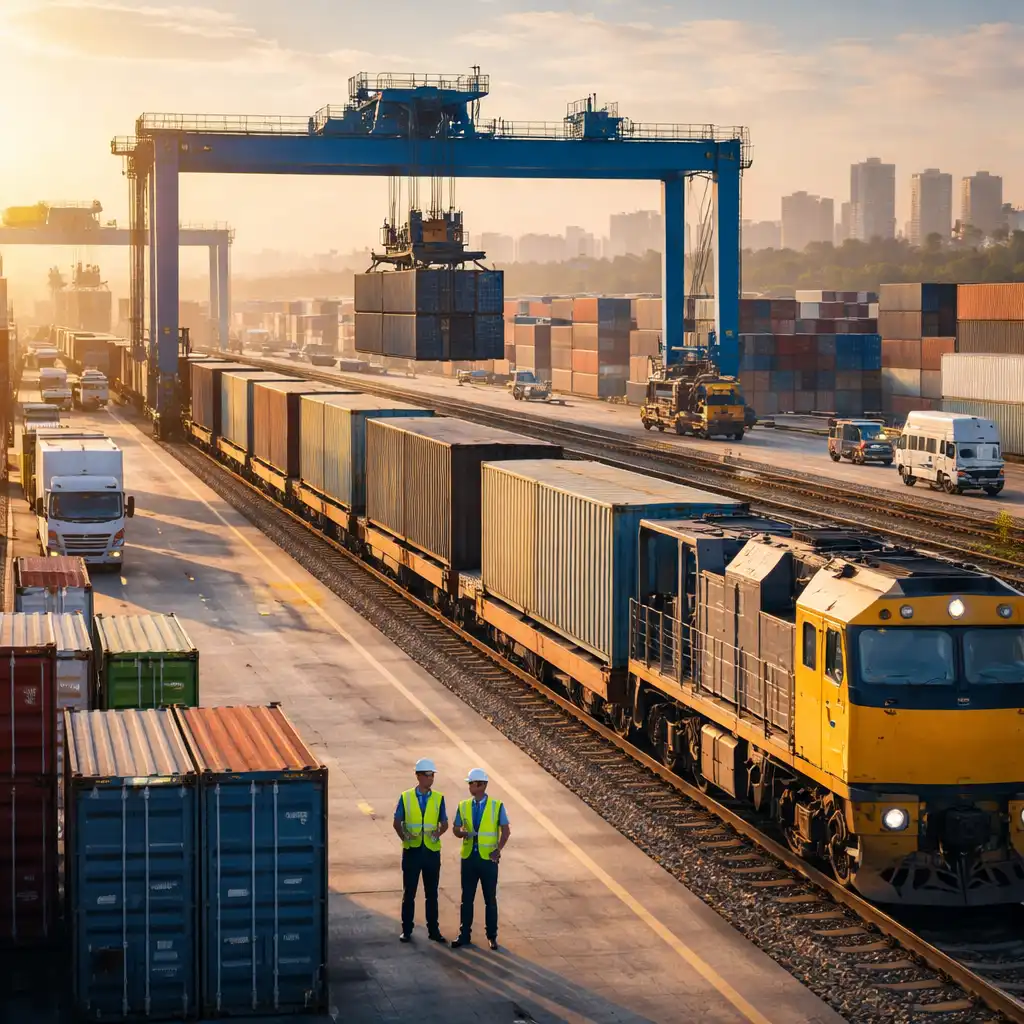
Understanding Rail Freight Basics: A Guide for New Businesses
Understanding Rail Freight Basics: A Guide for New Businesses
For Australian startups and SMEs moving beyond city limits, understanding rail freight basics can unlock lower costs, better reliability and reduced emissions. Rail is particularly powerful for regional producers, manufacturers and importers looking for scalable freight transportation solutions. This guide outlines the essentials so you can judge if a rail-based supply chain strategy suits your growth plans.
1. Know When Rail Freight Makes Commercial Sense
Rail works best for consistent volumes over medium to long distances, typically 500–800 kilometres or more. If you are regularly filling several trucks, moving dense pallets or serving east–west or regional-to-port corridors, rail can sharply reduce your cost per tonne-kilometre. New operators should compare total journey costs, including terminals and first/last mile, not just linehaul rates, when assessing integrated freight transportation options.
2. Match Your Freight Type to the Right Service
Most new shippers start with containerized intermodal freight that can be packed at your site, trucked to an intermodal terminal and then moved by train. This model supports flexible intermodal shipping services while keeping handling simple. Bulk commodities such as grain, ores or cement generally use dedicated trains and equipment. Understanding whether you need port shuttles, regional linehaul or national trunk services will shape pricing, service frequency and cut-off times.
3. Understand How Rail Pricing and Contracts Work
Unlike ad hoc truck bookings, rail contracts are usually built around origin–destination pairs, forecast volumes and term length. You’ll see separate charges for linehaul, terminal handling, container hire and sometimes fuel or network access surcharges. Many SMEs underestimate minimum volume thresholds, which can dilute savings. Robust end-to-end logistics planning, backed by realistic demand forecasts, is essential before entering negotiations with operators or third-party providers.
4. Plan Terminals and First/Last Mile Carefully
Most businesses access rail through public intermodal terminals rather than private sidings. Your performance hinges on how efficiently you manage truck access, time slots and loading discipline at both ends. Poor pallet quality, late arrivals or incomplete paperwork can trigger extra fees and missed departures. Well-coordinated rail intermodal logistics, supported by reliable local carriers, usually delivers the best balance of cost and service.
5. Prioritise Safety, Compliance and Insurance
Rail is statistically safer than road, but your company remains part of the chain of responsibility. Dangerous goods must be declared accurately, weights and documentation must align with Australian standards, and packaging must withstand terminal handling. The National Transport Commission outlines core requirements and reforms at https://www.ntc.gov.au, which is a useful reference for policy updates. Review your cover to ensure sustainable freight logistics practices extend to insurance for intermodal movements.
- You rely heavily on last-minute truck bookings that are becoming unreliable or too costly.
- Your volumes are growing quickly across multiple corridors or into new states.
- You lack internal expertise in logistics and supply chain optimisation and contract negotiation.
- You want rail-focused freight solutions but are unsure how to stage a low-risk trial lane.
- You need rail intermodal logistics modelling, KPI reporting and performance benchmarking.
If you recognise these signs, it may be time to partner with a specialist that can design rail-based supply chain strategy options, coordinate cross-border rail shipping services where relevant, and provide ongoing performance management. A structured pilot on a single lane allows you to test service quality, transit times and cost savings before scaling up. To explore tailored rail intermodal logistics and secure a competitive quote for your next phase of growth, speak with a dedicated rail freight specialist today.

Related posts
Sustainable Rail Solutions: Reducing Carbon Footprint in Freight Transportation
In an era marked by environmental concerns, finding sustainable solutions for fr
Sea Freight vs Rail Freight: Which is More Cost-Effective?
Compare sea freight vs Rail Freight costs, reliability, and risks for Australian
European Rail Operators Increase Cargo Traffic from China
European rail freight may have been having a torrid time recently, but it appear
