




Rail Freight Forwarding: Streamlining Your Supply Chain
Rail Freight Forwarding: Streamlining Your Supply Chain in Australia
Understanding Rail Freight in Australian Supply Chains
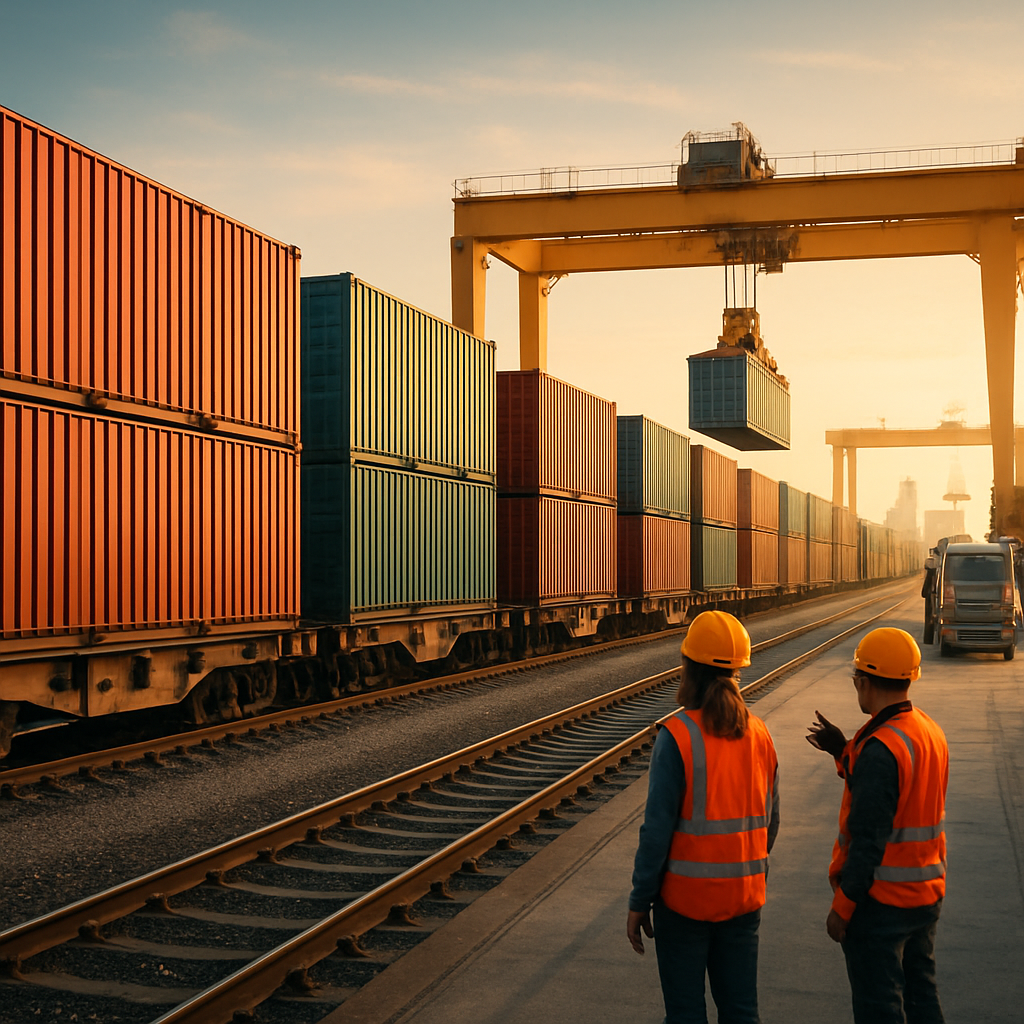
Rail freight forwarding is gaining traction in Australia as businesses look for more reliable, lower-emission ways to move goods between major cities, ports and inland regions. As congestion on key highways grows and diesel prices remain volatile, companies are reassessing their logistics and supply chain mix to balance cost, speed and resilience. Rail offers high-capacity corridors for containerised cargo, bulk commodities and palletised freight, often at a more stable price point per tonne-kilometre than road. For organisations managing national networks, the question is no longer whether rail has a role, but which freight transportation solutions and operating models will fit best.
Key Rail Freight Forwarding Options and How They Work
Direct interstate services suit high-volume shippers running consistent loads between capital cities or from ports to major inland hubs, providing fixed timetables and predictable transit windows. Intermodal shipping services combine long-haul rail with short-haul trucking, with containers transferred at terminals so freight is handled less and security is improved. For mining, grains and construction materials, dedicated bulk trains support end-to-end rail supply chains with specialised wagons and loading infrastructure. Many operators now offer integrated rail freight solutions, bundling terminal access, linehaul, storage and last-mile delivery, which can simplify contracting and performance management for larger shippers.
When Rail Works Best Compared with Road and Sea
Rail performs strongly on long domestic corridors such as Melbourne–Brisbane or Sydney–Perth, where linehaul distances make cost-efficient rail transport and lower emissions more compelling than trucking alone. Sea remains the default for international legs, but domestic rail often connects import and export flows between ports, inland terminals and regional distribution centres. Intermodal rail freight options are particularly effective where shippers can align volume forecasts with fixed schedules, and where origins and destinations sit within practical reach of terminals. Businesses with time-sensitive products may still lean on road for urgent freight, yet many adopt rail and truck intermodal services to manage base-load volumes while keeping flexibility for peaks.
- Map origin–destination pairs against existing rail corridors and terminals.
- Compare door-to-door transit times, not just terminal-to-terminal timetables.
- Assess sustainable rail freight services to support emissions reduction targets.
- Model total landed cost, including handling, storage and last-mile trucking.
- Review rail freight logistics planning capabilities, tracking technology and performance data.
Choosing the right partner for Rail Freight means weighing network coverage, terminal access, asset quality, service frequency and operational reliability. Many Australian shippers also assess providers on their ability to support a rail-focused logistics strategy, integrate with transport management systems and align reporting with ESG frameworks. For policy context and comparative mode data, the National Transport Commission publishes freight statistics and guidance at https://www.ntc.gov.au/transport-data/freight-data, which can help benchmark potential emissions and efficiency gains. As you evaluate options, consider piloting specific lanes, monitoring on-time performance and fine-tuning service levels before scaling up. To move from theory to practice, booking a consultation with an experienced forwarder can clarify which rail configurations best support your growth plans and long-term logistics and supply chain resilience.

Related posts
How Automation is Transforming the Road and Rail Freight Industries
The road and rail freight industries are the lifeblood of global commerce, ensur
Green Rails: Sustainable Practices in Rail Freight Transport
In an era where environmental consciousness is paramount, the railway industry h
The Evolving Landscape of Road and Rail Freight: Trends and Challenges in 2024
The road and rail freight industry has always been the backbone of global trade,
