





Duties, Taxes, and Tariffs: A 2026 Guide for Importers
Duties, Taxes, and Tariffs: A 2026 Guide for Importers
Duties, Taxes, and Tariffs: A 2026 Guide for Importers is increasingly central for Australian businesses facing tighter margins and more complex trade rules. Beyond simple rate comparisons, competitive advantage now comes from how intelligently you structure your import strategy, manage risk, and optimise cash flow. By aligning pricing, sourcing, and tax planning, importers can turn statutory obligations into a disciplined framework for controlling total landed cost rather than treating them as unavoidable overhead.
For Australian importers, the 2026 landscape for duties, taxes, and tariffs is defined by a mix of domestic legislation, trade agreements, and global standards. Customs duty, GST, excise-equivalent charges, and concessions must be assessed in line with the Customs Tariff Act 1995, free trade agreements, and import export regulations. Where many providers simply lodge entries, a differentiated adviser focuses on strategy: mapping product portfolios, forecasting liability, and aligning contractual terms with your long-term growth plans.
- Strategic review of tariff classification and valuation across your full SKU range
- Integrated analysis of GST, excise, and import duty and tax rules for each lane
- Structured approach to leveraging free trade agreements and origin planning
- Governance over the customs documentation process and supporting evidence
- Scenario modelling to understand the impact of sourcing and routing decisions
Key components that shape landed cost in 2026
In 2026, Australia’s duty framework is relatively low on average, but the detail matters. While nuisance tariffs have been removed from many lines, individual commodities can still attract higher rates if misclassified or if no preferential treatment applies. A structured Customs Clearance approach turns what is often treated as an administrative step into a repeatable commercial advantage, especially when supported by a robust customs documentation checklist and strong internal controls.
How free trade agreements drive competitive differentiation
Australia’s free trade agreements mean that similar importers can face very different landed costs depending on execution quality. One business may pay the full tariff because origin cannot be substantiated; another pays zero duty by maintaining disciplined supplier declarations, audit-ready records, and clear cross-border customs paperwork. Expertise in tariff classification and valuation, origin verification, and international shipping compliance can therefore influence pricing power, tender outcomes, and the viability of entering new markets.
- Consistent qualification of goods for preferential rates under multiple FTAs
- Documented methodology aligned with import export compliance rules
- Use of global trade documentation requirements to standardise supplier onboarding
- Clear internal playbooks and an international shipping regulations guide for your team
- Proactive engagement with regulators to secure clarity through advance rulings
Consider two importers of similar machinery in 2026. One accepts standard tariff treatment and absorbs duty on every shipment. The other secures accurate classification, validates origin, and applies relevant concessions, reducing the duty rate to zero. Over multiple consignments, this disciplined approach can fund expansion, technology upgrades, or sharper pricing. To deepen your understanding of comparative tariff structures worldwide, the World Trade Organization maintains its World Tariff Profiles resource at https://www.wto.org/english/res_e/publications_e/world_tariff_profiles_e.htm, which can be used to benchmark your current assumptions.
A high-performing partner in Duties, Taxes, and Tariffs: A 2026 Guide for Importers will not only manage entries, but create a governance framework that your finance, procurement, and logistics teams can rely on. That includes practical tools such as export documentation best practices, decision trees for routing, and escalation paths when classifications are unclear. If you are ready to compare your options, request a structured review of your landed cost model, question your current controls, and speak with a specialist team that can help align your import strategy with long-term commercial goals.

Related posts

Understanding Customs Brokerage: Your Guide for 2026
Understand customs brokerage risks for Australian importers in 2026, from docume
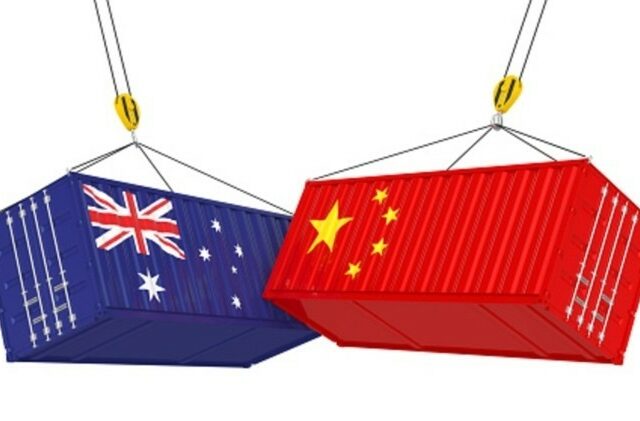
Chinese Export tariffs on Australian Businesses
It is no hidden secret that there have been rising tensions between China and Au

Customs Documentation Requirements: What You Need for 2026
Understand Customs Documentation Requirements for 2026 in Australia. Learn how a
