




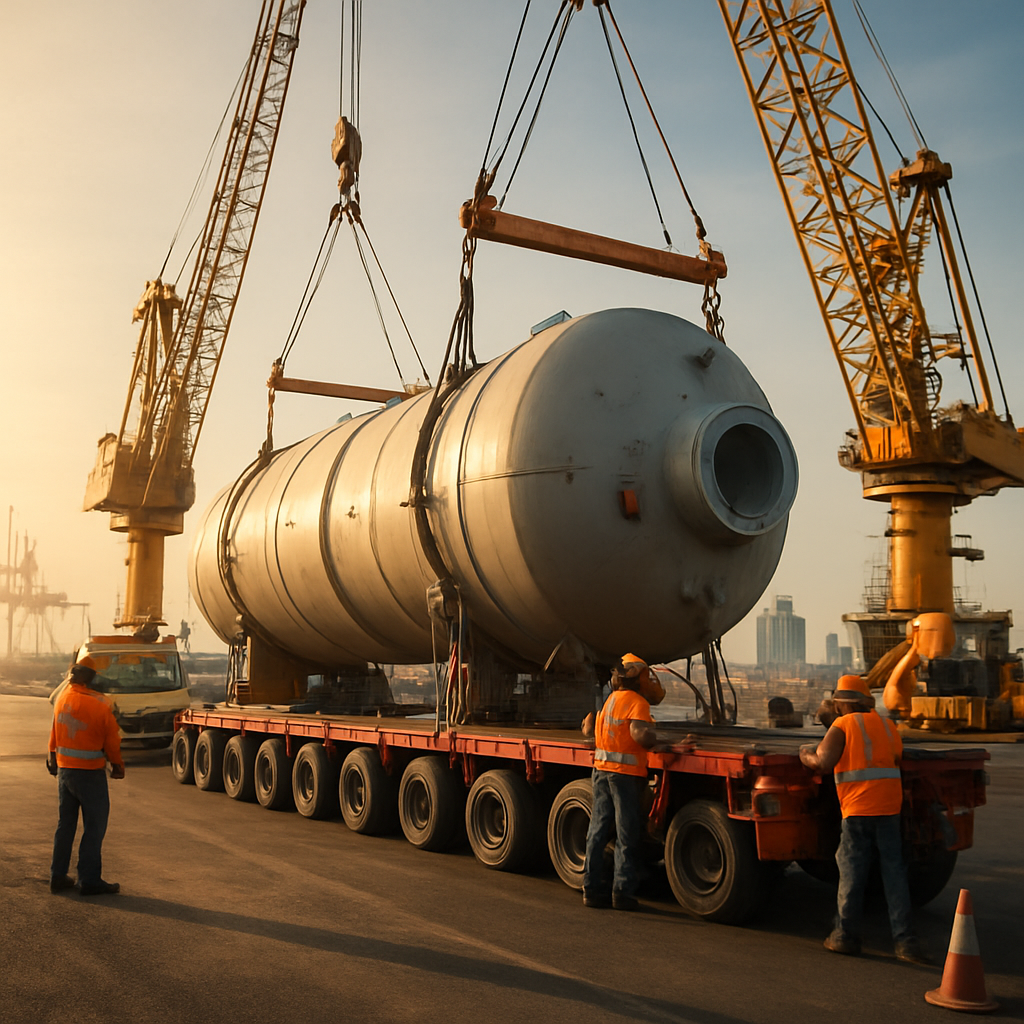
Complex Freight Planning: Strategies for 2026 Success
Complex freight planning is rapidly becoming a strategic priority for Australian businesses under pressure from volatile demand, capacity constraints and decarbonisation targets. To stay competitive in 2026, organisations need to move beyond basic scheduling and adopt integrated, data-led approaches that coordinate routing, mode choice, risk controls and cost management. This article outlines the main solution types and how they work, helping supply chain leaders understand which options best fit their freight profile and risk appetite.
Complex Freight Planning: Strategies for 2026 Success
Modern complex freight planning combines forecasting tools, digital visibility and specialist expertise to manage high-value, time‑critical or oversized loads. Many Australian operators are shifting from manual spreadsheets to platforms that consolidate orders, capacity and rates, supporting more precise supply chain management across modes and corridors. The focus is on balancing cost, service and risk, particularly when dealing with regional constraints, extreme weather and infrastructure bottlenecks. For organisations moving industrial equipment or remote‑area cargo, the planning effort now begins months before execution.
Key technology solutions for complex freight planning
Technology is reshaping how decisions are made, with AI, machine learning and telematics enabling near real‑time optimisation of routes and transportation solutions. Cloud transport management systems support integrated logistics planning by linking carriers, depots and customers on a single platform. Digital twins and simulation tools allow planners to test scenarios such as port disruptions or surge demand before committing assets. These tools are especially effective for temperature‑controlled freight, time‑sensitive deliveries and high‑value industrial transportation planning where delays are costly.
Building resilience, sustainability and specialist capability
Resilience now means diversifying ports, carriers and modes while developing a robust multi-modal transport strategy that can flex when disruptions hit. Australian shippers are combining nearshoring, selective inventory buffers and contracted surge capacity to support end-to-end freight management. At the same time, decarbonisation is driving trials of low‑emission fleets, rail over road where feasible, and solar‑powered warehousing, guided by frameworks such as the National Freight and Supply Chain Strategy outlined by the Australian Government at infrastructure.gov.au. For complex industrial moves, Project Logistics teams coordinate route surveys, permits and community engagement to avoid delays and ensure heavy lift transport management stays compliant and safe.
- Global operators offering freight forwarding services with in‑house engineering and permitting teams.
- Specialist providers focused on complex cargo logistics support and project freight forwarding for resources and energy projects.
- Control‑tower style 4PLs delivering neutral oversight and global project cargo coordination across multiple carriers.
- Regional experts experienced in remote‑area access, industrial corridors and local regulatory requirements.
- Consultancies that benchmark options, model costs and design bespoke complex freight planning roadmaps.
Choosing the right partner starts with clarifying freight volumes, lane stability, risk tolerance and internal capability, then assessing which providers can genuinely deliver integrated solutions rather than siloed services. Look for evidence of mature data analytics, scenario planning, safety culture and proven experience in complex environments, rather than relying solely on price. Independent reviews and small pilots can validate how well a provider’s systems integrate with your own and whether their project teams can manage end-to-end execution. As you refine your complex freight planning approach and explore advanced transportation solutions, consider engaging expert advisers who can compare options, stress‑test your strategy and help you design a more resilient path to 2026 and beyond.

Related posts
Green Projects: Implementing Sustainable Practices in Project Logistics
In today’s dynamic business landscape, sustainability has become a key con
Early Transpac Spot Rate Slump Signals Market Trouble
The flatlining of the pre-Chinese New Year shipping peak was in evidence in the
Panama Canal transit surcharges for new year carriers unveil
Two major carriers have announced new Panama Canal surcharges on Asia-US east co
