




Last-Mile Delivery Costs Rise Again in 2026: Why Urban Freight Is Becoming More Complex
Last-mile costs are rising again in 2026, and the reason is bigger than fuel prices or driver wages alone. The final leg of road freight now sits at the center of modern logistics, where customers expect faster shipping, cities want cleaner streets, and carriers must handle more stops in tighter spaces.
In many supply chains, the last mile is already the most expensive part of shipping. DHL and other logistics sources estimate that last-mile delivery can account for around 53% of total shipping costs, while other industry estimates place the range at 40–55%.
Why the Last Mile Is the Most Expensive Part of Road Freight
The last mile is expensive because it breaks the efficiency of traditional road freight. Long-haul transport moves goods in bulk between major hubs, while last-mile delivery splits that movement into dozens or hundreds of individual stops.
Each stop may involve a different address, delivery window, customer instruction, parking issue, or building access problem. This is why last-mile costs often account for such a large share of total shipping expenses.
A truck may only travel a short distance in a city, but the driver may spend much of the route stopping, parking, scanning, walking, waiting, or contacting customers. The real cost is not only distance, but the time and effort required per package.
Urban Freight Is Becoming More Complex in 2026
Urban freight is no longer just about sending a van into the city and completing a route. Cities are more congested, curb space is limited, and local governments are under pressure to reduce emissions, improve safety, and manage delivery traffic.
The World Economic Forum warns that without further action, delivery vehicle numbers and related carbon emissions in cities could rise by as much as 60% by 2030. That makes last-mile delivery a public infrastructure issue, not just a logistics challenge.
At the same time, customers want same-day or next-day delivery. Retailers want lower delivery costs, while cities want fewer vehicles and cleaner fleets.
The Biggest Drivers Behind Rising Last-Mile Costs
Several cost drivers are pushing last-mile costs higher in 2026. Labor remains one of the biggest because last-mile delivery still depends heavily on drivers, riders, dispatchers, support teams, and customer service staff.
Failed delivery is another major cost. SmartRoutes reports that the average failed delivery cost is just under $18, while Locus estimates that failed deliveries can cost businesses up to $20 per incident.
Speed also increases costs. Same-day delivery and narrow delivery windows reduce the ability to consolidate routes, often forcing carriers to send out more vehicles with lower delivery density.
Urban friction adds even more pressure. Congestion, parking limits, elevators, gated buildings, and loading restrictions all add minutes to each stop, and those minutes compound across hundreds of deliveries.
How Customer Expectations Are Reshaping Delivery Economics
Customers now expect fast, visible, and low-cost delivery. Many shoppers want real-time tracking, flexible delivery windows, easy returns, and clear communication.
SmartRoutes reports that 91% of consumers actively track packages, while more than 90% may abandon carts because of delivery fees. This creates a difficult balance for retailers.
Customers dislike paying high delivery charges, but the actual cost of last-mile delivery continues to rise. As a result, “free delivery” is usually absorbed into product pricing, subscriptions, minimum order values, or retailer margins.
Returns make the problem worse. A returned item can double the movement of goods through the network, adding more vehicles, more stops, and more pressure on already congested urban freight systems.
Why Cities Are Changing the Rules for Deliveries
Cities are changing delivery rules to reduce congestion, emissions, road safety risks, and competition for curb space. Road freight providers may face stricter access rules, delivery time windows, loading zone limits, and low-emission requirements.
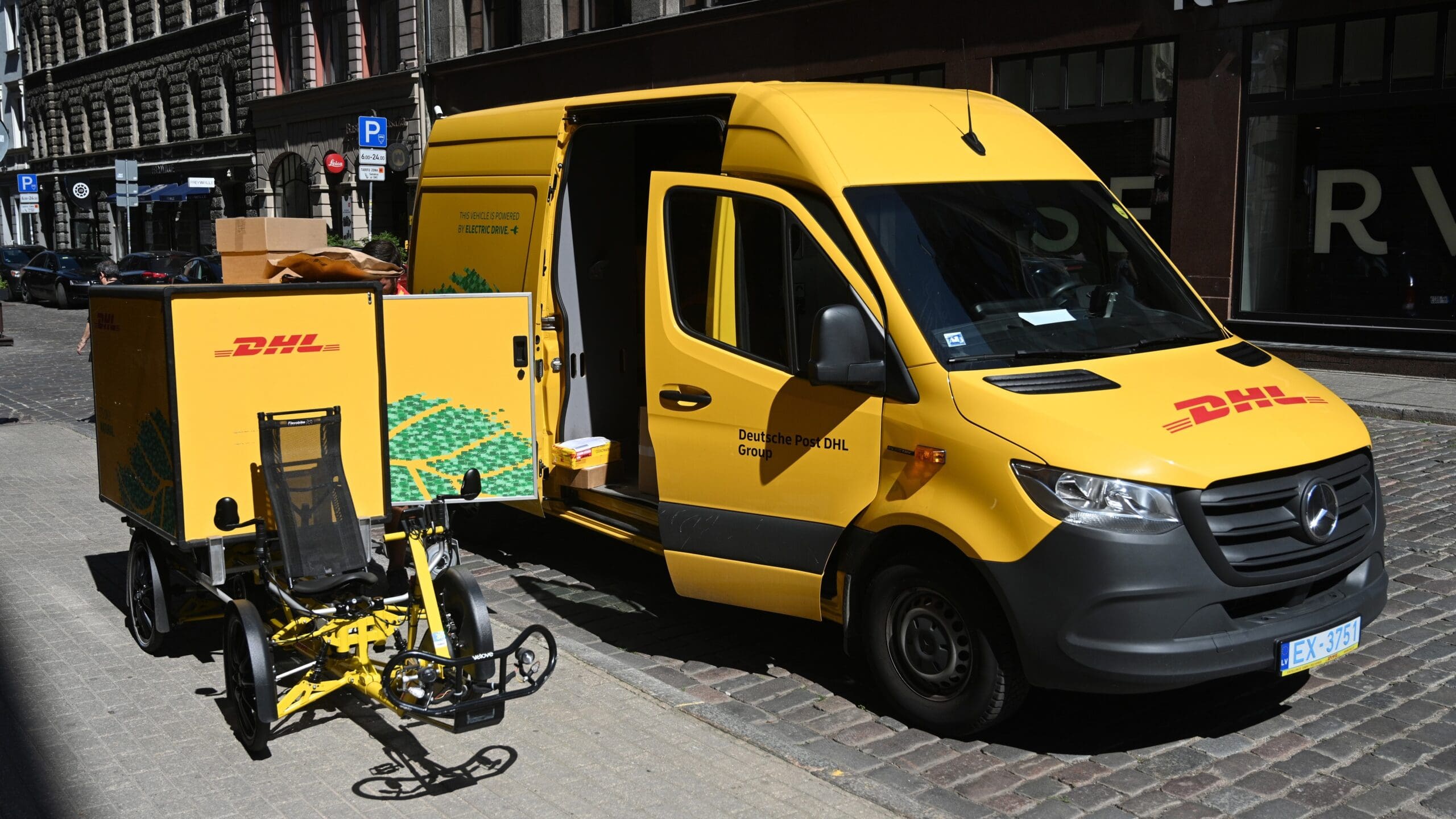
These policies can improve city life, but they also change delivery economics. Carriers may need to invest in electric vehicles, cargo bikes, smaller depots, parcel lockers, or better planning software.
Those investments may reduce long-term costs, but they can increase short-term complexity. A simple diesel van route is easier to manage than a mixed fleet of electric vans, cargo bikes, and urban pickup points.
Micro-Fulfillment and Urban Hubs Are Becoming More Important
One way companies are reducing last-mile costs is by moving inventory closer to customers. Instead of shipping every order from a large warehouse outside the city, businesses are using micro-fulfillment centers, dark stores, urban hubs, and local depots.
Shorter delivery distances can reduce travel time, improve delivery density, and support faster service. Some logistics sources estimate that micro-warehouses can reduce last-mile distance by 30–50%, depending on location and operating model.
However, micro-fulfillment is not a perfect solution. Urban space is expensive, and smaller hubs require careful inventory planning.
If the wrong products are stored close to the wrong customers, costs can rise instead of fall. Micro-fulfillment works best when paired with demand forecasting, route optimization, and accurate inventory data.
Parcel Lockers Can Reduce Failed Deliveries
Home delivery is convenient, but it is not always efficient. Drivers may arrive when customers are not home, apartment access may be restricted, or packages may require secure drop-off points.
Parcel lockers and out-of-home pickup points help solve this problem by consolidating multiple deliveries into one stop. Instead of visiting 30 separate homes, a driver can deliver many parcels to one locker bank, store, or collection point.
This improves delivery density and reduces failed delivery risk. It also gives customers more flexibility because they can collect parcels at a convenient time.
In dense cities with parking limits and apartment access issues, parcel lockers can significantly reduce operational friction and failed delivery costs.
Electric Fleets Help, but They Do Not Solve Everything
Electric delivery vehicles are becoming more common in urban road freight. They can reduce emissions, support low-emission zone compliance, and reduce exposure to fuel price volatility.
However, electric fleets do not automatically reduce last-mile costs. Operators still need charging infrastructure, route planning, maintenance support, vehicle financing, and battery management.
A poorly planned electric fleet can create new problems. Vehicles may run out of range, chargers may be unavailable, or routes may not match battery capacity.
Electric vans, cargo bikes, and compact urban vehicles work best when matched to the right route. Dense city routes with predictable distances may suit EVs, while scattered or long routes may still require different vehicle strategies.
Route Optimization Is Now Essential
Route planning used to mean finding the shortest path. In 2026, route optimization must consider traffic, delivery windows, vehicle type, driver capacity, parcel size, parking limits, and real-time disruptions.
Small inefficiencies multiply quickly. If every stop takes two extra minutes across 100 stops, that creates more than three hours of lost productivity.
McKinsey has estimated that 13–19% of logistics costs can come from inefficient interactions and handovers. In the U.S. economy alone, this can represent up to $95 billion in losses.
For road freight providers, route optimization is no longer optional. It is one of the clearest ways to reduce wasted miles, improve delivery density, and protect margins as last-mile costs continue to rise.
Conclusion
Last-mile costs are rising in 2026 because urban delivery has become more complex. The final leg of road freight now involves congestion, labor pressure, failed deliveries, stricter city rules, customer expectations, and sustainability requirements.
Since the last mile can represent around half of total shipping costs, small inefficiencies can quickly become major expenses. The solution is not one single technology, but a smarter mix of route optimization, micro-fulfillment, parcel lockers, electric fleets, customer communication, and realistic delivery promises.
The future of last-mile delivery will be less about “free and fast” and more about choosing the right delivery model for the right situation.
FAQs
- Why are last-mile costs so high?
Last-mile costs are high because each delivery requires individual stops, driver time, parking, scanning, customer communication, and sometimes repeat attempts. Unlike long-haul road freight, the last mile has lower delivery density and more unpredictable delays.
- What percentage of shipping costs comes from the last mile?
Many logistics sources estimate that last-mile delivery accounts for around 40–55% of total shipping costs. The figure 53% is commonly cited across industry reports.
- How do failed deliveries increase last-mile delivery costs?
Failed deliveries increase costs because the carrier may need to make another trip, contact the customer, store the parcel, or reroute the package. This adds labor, fuel or battery usage, and customer support time.

Related posts

Middle East Shipping Market Update
Maritime trade across the Gulf and surrounding routes remains under significant

Ocean Alliance Extends Partnership to 2032, Quashing ‘Defector’ Rumors
The Ocean Alliance east-west liner services vessel-sharing agreement between CMA
Climate-Controlled Logistics: Warehousing in Extreme Environments
Climate-controlled logistics refers to the management of goods under specific te
