




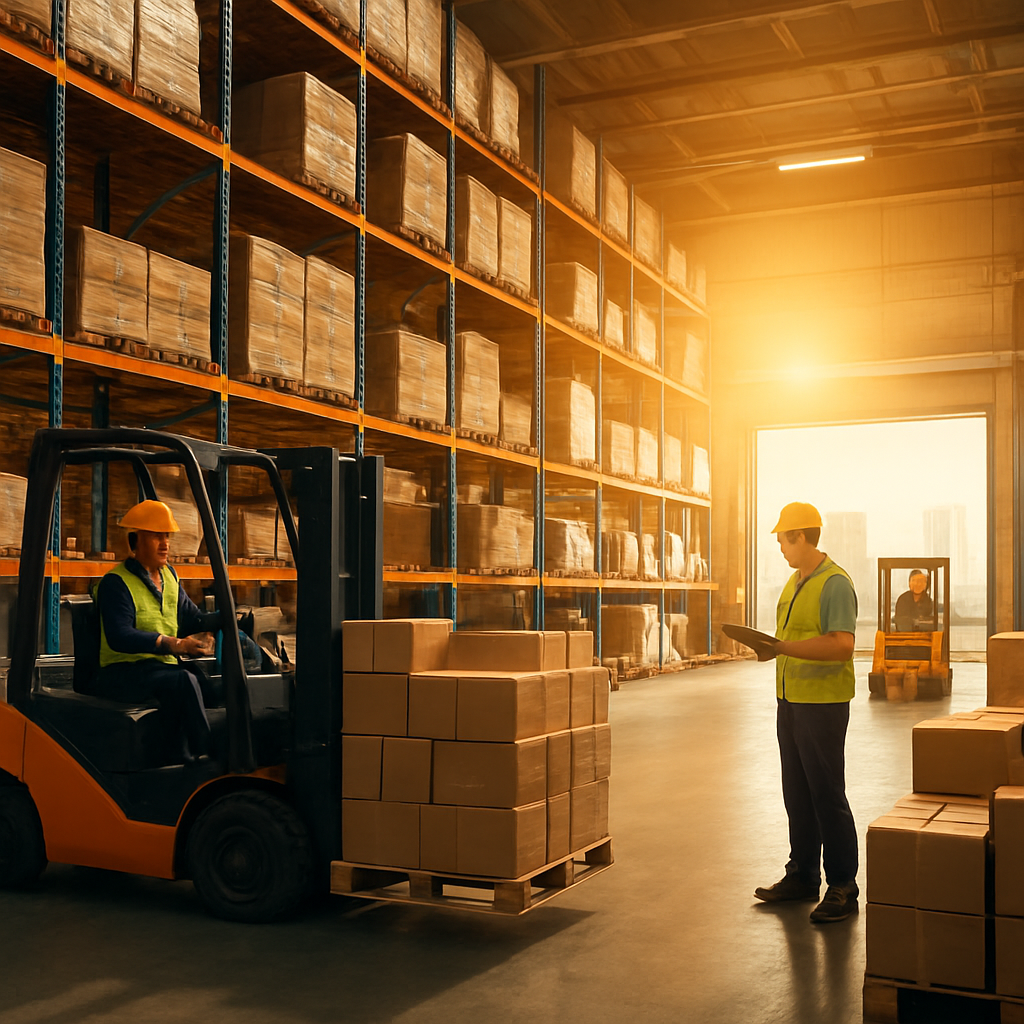
The Impact of Warehouse Location on Delivery Speed
The impact of warehouse location on delivery speed is emerging as a critical blind spot for Australian retailers and manufacturers. As shoppers grow accustomed to next-day or even same-day delivery, networks built around a single, distant distribution centre are increasingly unfit for purpose. Decisions made a decade ago on cheap land and centralised facilities now collide with tighter customer expectations, rising transport costs and congested urban roads.
- Delayed metro deliveries despite strong carrier performance
- Higher-than-expected transport costs per order
- Mounting pressure on customer service teams during peaks
- Difficulty launching faster delivery offers in key cities
- Growing gap between your service levels and market leaders
The Impact of Warehouse Location on Delivery Speed
Location shapes every kilometre and hand-off in the delivery chain, from pick face to front door. A warehouse sited on the fringe of Sydney or Melbourne may look efficient on a rent-per-square-metre basis, but long first-stop and last-stop legs add hours to runs. This drags on supply chain efficiency, undermines delivery-focused logistics management and forces operators to lean on costly workarounds. In this context, warehouse logistics solutions that ignore geography risk baking chronic delay into daily operations.
Why Location Has Become a Performance Risk
The bar has been reset by global and local giants. Amazon’s investment in Australian fulfilment and last-mile infrastructure shows how proximity enables rapid delivery at scale. By shifting stock closer to customers, they reduce reliance on premium freight and cut exposure to traffic volatility. Businesses still relying on a single east-coast shed often find even basic logistics management solutions cannot compensate for sheer distance. Over time, this gap translates into lost orders and weaker loyalty, especially in dense metro postcodes.
Warning Signs Your Network Is Holding You Back
Operational symptoms often appear before leaders recognise a structural problem. Persistent difficulty offering next-day delivery in major cities, drivers returning late due to long outer-suburb legs, and high split-shipment rates all point to inventory in the wrong place. Frequent use of express services to “rescue” late orders is another red flag. If customer complaints cluster in particular postcodes despite sound Warehousing processes, your network design rather than carrier performance is likely to blame.
The Hidden Cost of Ignoring Location Strategy
Distance quietly erodes margin through fuel burn, overtime, missed windows and failed first deliveries. Studies on urban freight and micro-consolidation hubs, summarised by Transportation Research Part A on ScienceDirect, show that shorter routes can improve last-mile supply chain efficiency and reduce emissions. Yet many organisations still focus solely on inventory storage options, overlooking regional warehousing strategies, scalable warehouse storage and warehouse inventory optimization. The result is a network that cannot support optimised inventory storage plans or real-time warehouse tracking in line with modern expectations.
For Australian businesses, rethinking warehouse location is no longer optional if they want reliable delivery-focused logistics management. Reviewing your footprint, testing alternative nodes and exploring pragmatic warehouse logistics solutions can turn delivery speed from a liability into a competitive edge. Now is the time to assess whether your current network truly supports your service promises, and to speak with an expert about reshaping it before mounting delays and costs become embedded in your everyday operations.

Related posts
Space Optimization: Maximizing Efficiency in Small-Scale Warehousing
In the realm of small-scale warehousing, where space is often a premium commodit

Supply Chain Optimization: Balancing Cost and Customer Satisfaction
In today’s highly competitive business landscape, supply chain optimizatio
Amazon Fulfillment in Logistics – A Quick Guide on How to Get Started and How it Works
Fulfillment by Amazon (FBA) is a service provided by the e-commerce giant, Amazo
