




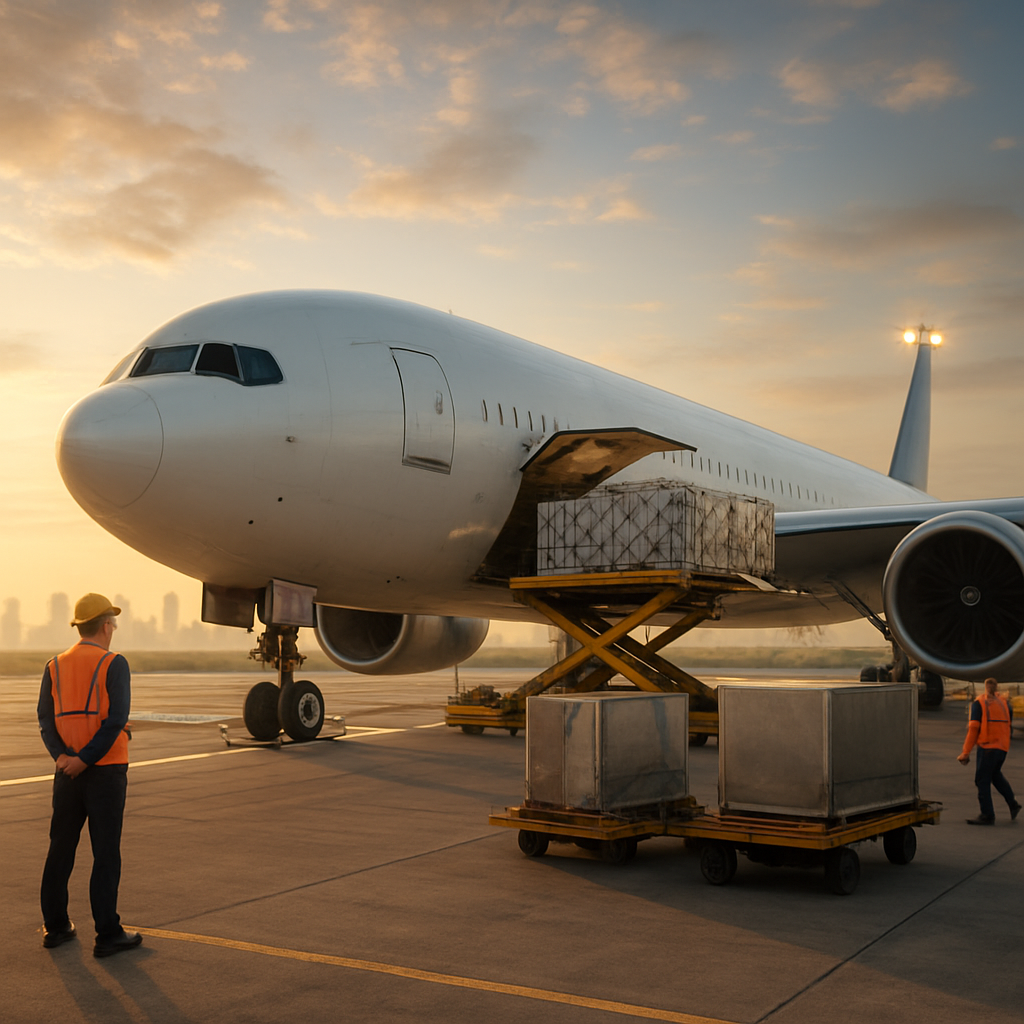
The Future of International Air Cargo Logistics in 2026
In 2026, Australian exporters are treating Air freight as a Strategic Differentiator in 2026 rather than a reactive cost. With international air cargo capacity stabilising and yields still above pre‑pandemic levels, the businesses gaining an edge are those that use air as a planned, data‑driven component of their supply chain strategy. This shift is particularly important for shippers of perishables, pharmaceuticals and high‑value technology, where delivery reliability directly affects revenue and brand reputation.
The Future of International Air Cargo Logistics in 2026
International air cargo logistics in 2026 is defined by quality of service, not just access to space. Australian businesses are scrutinising providers on schedule integrity, lane performance and their ability to protect cargo through complex customs and security environments. Rather than chasing the lowest rate, shippers increasingly compare end‑to‑end air freight solutions that balance speed, cost and risk across their key trade lanes into Asia, North America and Europe.
What separates leading providers is how they design and manage each Air freight shipment from booking to final mile. A strategic approach considers product sensitivity, seasonal demand and capacity constraints, then builds contingency plans across a global air cargo network. This means fewer surprises, stronger inventory control and more predictable cash flow for exporters and importers managing tight delivery windows and strict service‑level agreements.
Air freight as a Strategic Differentiator in 2026
Air freight as a Strategic Differentiator in 2026 hinges on reliability, agility and integration with customers’ digital systems. For example, a medical device manufacturer needs time-critical air freight services with guaranteed uplift and proactive alerting if a connection is at risk. A fresh food exporter, by contrast, may need tailored Air freight solutions that combine pre‑cooling, strict cut‑off times and rapid clearance to preserve shelf life and retailer compliance.
Digital Visibility, Risk Control and Compliance
Digital innovation is now a baseline expectation, with shippers demanding real‑time air cargo tracking technology, milestone visibility and automated documentation. API connectivity with ERP and eCommerce platforms allows logistics teams to react quickly when flights are disrupted and reallocate stock before customers are affected. Initiatives such as IATA’s ONE Record framework, outlined on the official IATA website at https://www.iata.org/en/programs/cargo/one-record/, are driving standardised data exchange and higher transparency across Air cargo stakeholders.
- Consistent on-time performance across priority and standard international air freight services.
- Demonstrated expertise in customs, biosecurity and dangerous goods compliance for Australian trade lanes.
- Proactive exception management, including rebooking and route redesign during disruption events.
- Transparent, lane-specific pricing with clear surcharges and realistic transit commitments.
- Sustainability reporting aligned with corporate ESG goals, including options for lower-emission routings.
Choosing a Partner for Competitive Advantage
When assessing providers, Australian shippers look beyond aircraft types and standard products to examine how a partner engineers air freight logistics optimization for their portfolio. The right provider offers scenario planning, service tiers and multimodal back‑up plans across critical cross-border air freight routes. This approach is especially valuable for businesses managing complex catalogues, promotional peaks or strict quality regimes in agrifood, healthcare and advanced manufacturing sectors.
What Sets a Strategic Air Freight Partner Apart
A strategic partner combines operational control, strong carrier relationships and advanced analytics to deliver express international air cargo when it genuinely adds value. They provide lane-by-lane performance dashboards, granular emissions reporting and clear escalation paths across their end-to-end air freight solutions. For many Australian organisations, partnering with a provider that treats International air freight as a core strategic capability, not just a transactional service, is becoming essential to maintaining competitiveness.
- Dedicated account management with sector-specific expertise and 24/7 operations support.
- Integrated planning across origin, linehaul and destination handling in major global air cargo network hubs.
- Use of data and predictive tools to anticipate disruption and protect time-sensitive consignments.
- Continuous improvement programs, including regular performance reviews and optimisation workshops.
- Scalable solutions that adapt quickly to shifts in demand without sacrificing service quality.
If your organisation is re-evaluating its strategy for 2026, now is the ideal time to benchmark current arrangements and explore more strategic Air freight options. Speak with our team to review your trade lanes, service priorities and digital integration needs, and gain a clear comparison of how a tailored approach to international air cargo capacity can improve reliability, cost control and customer satisfaction across your network.

Related posts

Geopolitical Airspace Restrictions in 2026: Why Longer Flight Paths Are Driving Higher Costs
If your air freight costs are climbing in 2026 even though volumes feel stable,
Air Freight vs Sea Freight: Which Shipping Method Wins in 2026?
Compare air freight and sea freight for 2026: costs, speed, reliability and sust
Atlas Ends Amazon Flights Due to Low Utilization
Pilots have reported that Amazon and Atlas Air have ended their CMI contract. Ne
